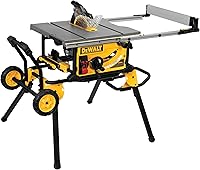
SKIL Table Saw vs Bosch GTS15-10: Which Is Better? (October 2026)
Choose the Bosch GTS15-10 for its 32-1/8 in rip capacity and Gravity-Rise stand, or the SKIL SPT99-11 for its worm drive, 3-5/8 in depth of cut and 16 in stand wheels. Both are corded 10-inch saws with rack-and-pinion fences.
On this page (11 sections)
- SKIL table saw vs Bosch: what is the main difference?
- Which saw handles wider rips?
- Which fence is easier to adjust?
- Which stand fits frequent moves?
- Which safety and startup features matter?
- How should you set up either saw?
- What mistakes should you avoid?
- Who should buy the SKIL SPT99-11?
- Who should buy the Bosch GTS15-10?
- What should you measure before buying?
- SKIL table saw vs Bosch: which should you choose?
Choose the Bosch GTS15-10 for its wider stated rip capacity and Gravity-Rise stand, or the SKIL SPT99-11 for its worm drive, stated cut depth and larger stand wheels. This SKIL table saw vs Bosch comparison comes down to the cuts you make, the space you have and how often you move the saw.
Both are corded 10-inch saws with rack-and-pinion fences and a brake feature. Their stands and support features make them portable options, but neither removes the need to plan material support and a safe cut path.


SKIL table saw vs Bosch: what is the main difference?
Bosch offers more stated rip capacity, while SKIL gives a specific 3-5/8 in depth-of-cut figure. The difference in rip capacity is 1-5/8 in, which matters most if your regular cuts use the full width.
The SKIL weighs 94.3 lb and the Bosch weighs 103 lb. Both have wheeled stands, so consider the full setup and the route between storage and work.
SKIL's stand has 16 in wheels and easy-load handles. Bosch pairs its saw with a Gravity-Rise wheeled stand that uses a foot-release pedal and single-action setup and take down.
Start with your cut list: the widest rip, deepest stock and largest panel you expect to handle. For more help matching a saw to cut width, see how to choose table saw rip capacity.
Which saw handles wider rips?
The Bosch GTS15-10 has the larger stated rip capacity at 32-1/8 in. The SKIL SPT99-11 has a 30-1/2 in capacity, which is still substantial for many home and jobsite cuts.
A wider fence range can help when ripping sheet goods or wide boards, but it does not support a panel by itself. Plan for infeed and outfeed room, a clear path, and a helper or support system when the material is difficult to control alone.
SKIL includes outfeed and left support to help one person make larger cuts. Bosch's listed features describe its capacity and portability, without specifying matching support wings.
Measure the panel sizes you actually buy and the space around the saw. The guide to choosing a table saw for a home shop covers layout choices alongside capacity.
How does SKIL table saw vs Bosch compare for cut depth?
SKIL is the clearer choice if a published depth-of-cut figure matters to your work. Its stated 3-5/8 in depth can help you assess whether it suits thicker stock; there is no matching figure provided for the Bosch here.
Check the manual for the exact blade-height range and operating guidance for either saw before planning a cut. Capacity figures are only useful when the material, blade and setup are appropriate for the task.
Which fence is easier to adjust?
Both saws use rack-and-pinion fences, with different adjustment details. SKIL describes quick, smooth movement, while Bosch uses a hand dial with color-coded index pins and a matching scale.
A geared fence can make repeated width changes easier, but it still needs to be checked against the blade. After moving the saw or changing fence position, confirm alignment by following the manual.
If setup accuracy is a concern, learn how to align a table saw blade and fence. That guide can help you build a repeatable check into your setup.
Which stand fits frequent moves?
Choose SKIL for its 16 in wheels and easy-load handles, or Bosch for its Gravity-Rise stand and single-action setup. Think about your route, not only the wheels: steps, uneven ground, thresholds and turns can affect how manageable a saw is to move.
Bosch's stand has 8 in treaded rubber-composite tires and a foot-release pedal. SKIL's stand uses 16 in wheels and easy-load handles.
Weight is another consideration. SKIL's saw weighs 94.3 lb, compared with 103 lb for Bosch, so plan storage and lifting around your own space and routine.
If you want a ready-to-roll setup, compare other options in table saws that come with a stand. Measure the storage footprint and leave room to deploy the stand and support material.
Which safety and startup features matter?
Both saws include a brake feature, and Bosch specifies a Smart Guard System with a riving knife, anti-kickback pawls and barrier guard. SKIL's included components also name a Smart Guard System and an anti-kickback device.
Bosch says its brake helps stop the blade in about 3 seconds. Its soft-start circuitry manages startup intensity and minimizes the possibility of tripping a circuit breaker.
No matching brake-stop time or soft-start detail is specified for SKIL. Review the table saw safety features guide and the manual for each saw, then keep the guard and anti-kickback parts installed as directed.
How should you set up either saw?
Set the saw on a stable, level surface with enough room to feed and support the longest material you plan to cut. Before switching it on, secure the stand, check that the blade and fence are aligned, and confirm that guards and safety parts are in place.
Keep the cord out of the feed path and position the saw so you can stand clear of the material's travel. For long boards or sheet goods, arrange outfeed support before starting rather than trying to add it during a cut.
Bosch has on-tool storage for the rip fence, miter gauge, Smart Guard System, wrenches and push stick. Return accessories to their storage spots after use so the next setup starts with the parts together.
Follow each manual for assembly, blade changes, height and angle adjustments, and cleanup. Do not use a support table or roller stand in a way that changes the saw's stability or pulls the work off line.
What mistakes should you avoid?
Don't choose by one capacity number alone. A saw with enough rip capacity can still be a poor fit if your room lacks support space or your route makes moving it impractical.
Avoid assuming the two saws share the same cut-depth range or startup behavior. SKIL has a stated depth-of-cut figure, while Bosch specifies soft-start circuitry; check both manuals for details that matter to your planned work.
Don't skip fence checks after transport or adjustment. A rack-and-pinion mechanism helps move the fence, but accurate cuts still depend on setup and controlled material handling.
Avoid cutting a large panel without planning how to support it from start to finish. If one person cannot keep the work stable and controlled, change the setup or get appropriate help.
Who should buy the SKIL SPT99-11?
The SKIL suits buyers who value its worm drive power train, stated cut depth, larger wheels and built-in material support. Its outfeed and left support are useful when one person needs to manage larger cuts.
Choose SKIL if your work includes stock where the stated depth matters, or if the stand's 16 in wheels and easy-load handles suit your transport route. Its 30-1/2 in rip capacity also covers a broad range of panel work.
Skip it if your main priority is the Bosch's extra rip width or its specified soft-start circuitry. For a closer look at its features and intended work, read the SKIL SPT99-11 review.
Who should buy the Bosch GTS15-10?
The Bosch suits buyers who want the larger stated rip capacity, a hand-dial fence and a stand designed for quick setup and take down. Its electronically regulated speed helps maintain speed under load.
Choose Bosch if your repeated cuts benefit from the extra 1-5/8 in of rip capacity or if you value its color-coded fence scale, Smart Guard System and on-tool storage. Its 15-amp motor and soft-start circuitry are also clearly specified.
Skip it if you need a confirmed depth-of-cut figure before choosing, or if SKIL's larger wheels better fit your route over steps or rough ground. Check the Bosch manual for any cut-height detail that is essential to your work.
What should you measure before buying?
Measure your material, work area and storage route before deciding between these saws. A small difference in capacity matters less if you cannot keep the stock supported and moving safely.
Write down the widest routine rip and deepest planned cut, then compare them with the stated capacities and the manuals. Measure doorways, steps and storage space, and allow room to set up the stand and support long material.
The SKIL saw measures 39.76 x 30.2 x 20.08 in, and the Bosch measures 28.1 x 27.8 x 13.53 in. Account for the stand, extensions and the space needed to work around the saw.
For layout help, read how much space a table saw needs in a garage shop. If your work and room point toward a stationary machine, compare contractor and hybrid table saws.
SKIL table saw vs Bosch: which should you choose?
Choose Bosch for the wider stated rip capacity and Gravity-Rise setup; choose SKIL for its stated depth of cut, 16 in wheels and outfeed support. Let your largest routine cut and your moving route settle the decision.
For frequent wide-panel work, Bosch has the larger capacity. For work where the SKIL's specified cut depth and wheel size fit better, its stand and support features make a stronger match.
If portability is still your deciding factor, compare the Evolution R10TBLX and R10TS as another jobsite-saw matchup. Either saw is a sensible choice when its stated capacity and setup features line up with your work.
External references: SKILSAW SPT99-11, Bosch GTS15-10.
Frequently asked questions
Which saw has more rip capacity, SKIL or Bosch?
The Bosch GTS15-10 has more stated rip capacity at 32-1/8 inches, compared with 30-1/2 inches for the SKIL SPT99-11. That extra width may matter when you regularly break down wide panels, but plan support space and safe handling too.
Which table saw is lighter?
The SKIL SPT99-11 weighs 94.3 pounds, while the Bosch GTS15-10 weighs 103 pounds. Consider the stand and your route when planning transport, storage and setup.
Do both saws have rack-and-pinion fences?
Yes. Both use rack-and-pinion fence systems.
SKIL describes quick, smooth adjustments.
Bosch uses a hand dial with color-coded index pins and a matching scale.
Which saw has a larger depth of cut?
The SKIL SPT99-11 has a stated depth of cut of 3-5/8 inches. No matching depth-of-cut figure is available for the Bosch, so check its manual if cut height is central to your choice.
Are the SKIL and Bosch table saws cordless?
No. Both are corded electric saws.
Bosch has a 15-amp motor and soft-start circuitry, while SKIL uses a worm drive power train.
Plan the outlet and cord route for either saw.