What Rip Capacity Do You Need on a Table Saw?
Choose rip capacity by the widest piece you need to cut from the blade to the fence. For many sheet goods and wide shelves, 32 inches or more gives you useful room; narrower work may need less.
On this page (7 sections)
Choose table saw rip capacity by the widest board or panel strip you expect to cut from the blade to the fence. Around 32 inches or more gives room for many wide shelves and sheet goods, while trim and narrow stock can work with less.
Rip capacity is a fence-to-blade distance, not the length of the table or the width of material the saw can handle in every setup. Think through your common cuts, how you will support the work, and where the saw will sit in your shop.
What is table saw rip capacity?
Table saw rip capacity is the greatest distance between the blade and the rip fence for a guided rip cut. Saws often state the capacity with the fence to the right of the blade, but check the manual for the measurement and fence position.
The number helps you judge whether the fence can reach the width you need. It doesn't say how easy a large sheet will be to control, whether your outfeed area is long enough, or how much support you need beside the saw.
A 32-inch capacity lets you set the fence about 32 inches from the blade in that position. It does not mean the saw can safely support a 32-inch-wide panel by itself.
How much rip capacity do you need?
Pick capacity based on the widest regular rip cut in your project plan, with some room for occasional wider work. For shelves, cabinet parts, and many plywood strips, about 30 to 32 inches can be a useful range.
A smaller capacity can suit trim, framing, and narrow boards. If your work includes full-size plywood panels, remember a panel is 48 inches wide: the saw's stated capacity may not let you rip it in half directly from the edge.
Measure the actual stock and mark the finished part width. Also account for the blade kerf, which removes material, and the fence's measurement scale.
Is 32 inches enough for plywood?
Thirty-two inches can suit many plywood rips, but it isn't enough to divide a 48-inch sheet in half from its edge in one guided pass. The cut width depends on which edge you place against the fence and how you stage the sheet.
Large panels are awkward to lift and keep flat. Use a helper or a panel-cutting approach that keeps the sheet supported, and follow the saw's safety instructions.
The table saw space guide can help you plan room for the saw, the material, and your infeed and outfeed paths.
When does more rip capacity help?
More capacity helps when your planned part width is wider than the saw's fence can reach. It can also reduce the number of setups for repeated wide cuts.
You may not need extra capacity for narrow trim, framing lumber, or small craft parts. A larger saw can take more shop space, so compare the added reach with your typical work and storage limits.
A wider cut still needs a controlled feed. Keep the panel flat against the table and fence, and use suitable support so the work doesn't sag or twist.
What else matters besides the capacity number?
A stable fence, a flat work path, and support for long or wide stock matter alongside the stated capacity. A longer reach is only useful when you can set the fence accurately and control the piece through the cut.
For help matching other saw specs to your work, see our plain guide to choosing a table saw. If you are deciding between portable saw styles, the guide to contractor and hybrid table saws explains how those saw types fit different shop needs.
Which saws offer about 32 inches of rip capacity?
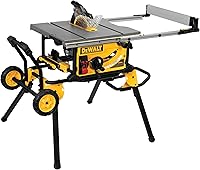
The DeWalt DWE7491X and Delta 36-6023 each have a 32.5-inch rip capacity. Either gives a buyer looking for that reach a way to compare fence features and included setup.
The DeWalt has a rack-and-pinion telescoping fence and a two-position flip-over rip fence for narrow cuts and material support. It comes with a scissor stand.
The Delta has a rack-and-pinion fence system and a 32.5-inch rip capacity. Its fence design allows cuts on narrow pieces.
Compare the work surface and stand with your shop layout before choosing. Capacity alone doesn't settle whether a saw is easy for you to move, store, or set up.
Can an auxiliary fence help with wide stock?
An auxiliary fence can add a taller or longer contact face, but it doesn't change the saw's rip capacity. It can help when the existing fence needs more material guidance or a place to attach compatible accessories.
The BOW XT XTENDER is a 46-inch T-track fence system with a 5-inch-tall face. It clamps to existing fences with Bow T-Track clamps, sold separately, and has slots for accessories such as featherboards.
The Woodpeckers auxiliary rip fence is 36 inches long and includes two 7-inch material supports. It uses standard track clamps, which are not included, and is sized for jobsite saws and other compact machines.
Check the attachment's fit and instructions before use. Support the stock on both sides of the blade as needed, and keep clamps and accessories clear of the blade path.
How do you measure the rip capacity you need?
Measure from the blade to the fence at the widest setting you expect to use, then compare that distance with the saw's stated capacity. Leave enough room for the fence to lock securely and for your hands and support equipment to stay clear.
For a project, mark the cut width on the workpiece and account for the kerf. If you are making repeated cuts, plan a setup with the saw unplugged and follow the manufacturer's setup steps.
A fence upgrade may improve control or adjustment, but it can't create rail travel the saw doesn't have. See whether a table saw fence upgrade is worth it if your current fence is the weak point.
Which rip capacity should you choose?
For table saw rip capacity, choose a saw that reaches your widest common cut and leaves enough room for material support. About 32 inches can be a practical target for wide shelves and many sheet-goods cuts; narrower jobs may not need it.
Pick the DeWalt or Delta if their capacity matches your work and their other features suit your shop. Consider an auxiliary fence when you need a different fence face or added guidance, and plan a separate supported method for cuts wider than the saw's capacity.
If the saw will live in a tight garage, check how much room a table saw needs before you settle on a wider setup.
Frequently asked questions
What does rip capacity mean on a table saw?
Rip capacity is the maximum distance from the blade to the rip fence for a cut. It is usually given for the fence positioned to the right of the blade, where many saws offer more room.
Check the saw manual for how its capacity is measured and which fence position it describes.
Is 32-inch rip capacity enough for plywood?
A 32-inch rip capacity can handle many common plywood rip cuts, but it won't split a full 48-inch sheet down the middle in one pass from its edge. Plan the cut around your starting width, use a stable support setup, and get help handling large panels.
Can a table saw cut wider than its rip capacity?
The fence sets the maximum width for a guided rip cut, so a wider cut needs another safe method or a different saw setup. Don't move the fence beyond its rails or improvise an unsupported cut; use the saw manual's guidance and suitable panel support.
Does a longer fence increase rip capacity?
A longer auxiliary fence face can add workpiece guidance or support, but it doesn't automatically extend the saw's fence rails or measured rip capacity. Check that any attachment fits your fence, and follow its instructions for clamps, positioning, and support.