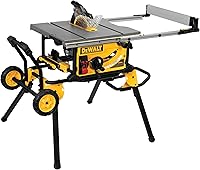
Hybrid Table Saws: What They Are and Who Should Buy One
A hybrid table saw is a stationary shop saw that combines traits of contractor and cabinet saws. Choose one when your shop has room and suitable power, then compare its fence, dust collection, and safety parts with the cuts you make.
On this page (8 sections)
- What does a hybrid table saw offer?
- Who should buy a hybrid table saw?
- How does a hybrid compare with contractor and cabinet saws?
- How do you choose a hybrid table saw?
- Which saw fits each kind of shop?
- How should you set up and care for a hybrid table saw?
- What mistakes should you avoid when buying a hybrid table saw?
- Which table saw should you choose?
A hybrid table saw is a stationary shop saw that combines traits of contractor and cabinet saws. It can suit a home woodworker who wants a fixed workshop setup, but the category name alone doesn't tell you whether a particular saw fits your space, power supply, or work.
Compare the motor, fence, table support, dust collection, safety parts, and setup needs. If you need to move the saw often or have little room, a compact or contractor-style model may be a better match.
What does a hybrid table saw offer?
A hybrid table saw sits between contractor and cabinet styles, but the details vary by model. Think of it as a category to investigate, not a promise of a specific motor, base, or feature set.
Start by asking what the saw needs to do in your shop. Regular ripping of long boards calls for room to feed and support stock; repeated cuts also make a steady fence and an easy-to-use setup valuable.
A hybrid is usually best considered for a permanent or semi-permanent workshop. If you need a saw that's easier to place or move, compare it with contractor table saws and their tradeoffs.
Who should buy a hybrid table saw?
Buy one if you have a dedicated shop area and want a stationary saw for repeated woodworking cuts. It makes less sense when you need to pack the saw away, move it between jobs, or keep the garage open for other uses.
Before shopping, write down the materials and cuts you make most often. Include the widest rip you need, whether you cut sheet goods, how often you make non-through cuts, and how you'll handle long stock.
If you're still choosing a shop setup, our table saw guide for home shops covers space, power, and other buying decisions. You can also compare table saws for woodworking in a home shop.
How does a hybrid compare with contractor and cabinet saws?
A contractor saw often suits a shop where easier placement matters, while a cabinet saw is aimed at a more substantial fixed shop. A hybrid is positioned between them, but compare the particular saws rather than assuming every model shares the same strengths.
| Saw type | Consider it when | Check before buying |
|---|---|---|
| Contractor | You want a shop saw that's easier to place or move | Base, weight, dust collection, and fence |
| Hybrid | You want a stationary saw with selected shop features | Motor, power, footprint, dust collection, and fence |
| Cabinet | You have room for a heavier fixed shop machine | Weight, installation, circuit needs, and infeed and outfeed space |
These are broad categories, not a performance ranking. Compare contractor and hybrid table saw options against your shop requirements.
How do you choose a hybrid table saw?
Choose by checking power, workspace, fence capacity, dust handling, and safety parts in that order. Together, these determine whether the saw can be installed and used comfortably for the cuts you have in mind.
Does your shop have the right power for a hybrid table saw?
Match the saw's voltage and current needs to the power available in your shop. Some models need a dedicated circuit or a different outlet, so check the manual and ask a qualified electrician if you aren't sure.
Don't assume two shop saws need the same circuit because they share a category. Our table saw horsepower guide explains how motor needs relate to the work you plan to do.
Will a hybrid table saw fit your shop?
Measure the saw and leave room for the workpiece to move safely across it. Account for the rails, extension tables, dust hose, and outfeed support as well as the saw's main footprint.
A saw can fit between walls and still leave too little room for long boards or sheet goods. Use our guide to how much room a table saw needs in a garage shop before settling on a spot.
Is the fence right for your cuts?
Choose a fence that locks securely and supports the rip widths you use. Check the rail length and available table support, especially if you often rip wide sheet goods.
Maximum rip capacity doesn't tell you whether your shop has room to use it. See what rip capacity you need on a table saw and measure the path for both the infeed and outfeed.
How will you collect dust?
Check the saw's dust shroud or collection port and plan how you'll connect it to your collector or shop vacuum. The hose should reach without crossing a walkway or getting in the way of the fence, blade, or stock.
A port is only one part of a dust setup. Make room for the hose and collector before you place the saw, then follow the saw and collector instructions.
Which safety parts should come with it?
Check for a blade guard and riving knife, and learn when each can stay in place for your cuts. Keep them installed whenever the operation allows, and follow the manual for non-through cuts.
A guard, riving knife, or brake has a different role. Our guide to table saw safety features explains what to look for and how to use each part.
Which saw fits each kind of shop?
The best fit depends on whether you want a fixed shop machine, a contractor-style setup, or a compact saw. These examples show why comparing features matters more than choosing by category label alone.
Is the Grizzly G1023RLX right for a dedicated shop?
Choose the Grizzly G1023RLX if you want a cabinet saw with a 3 HP, 240V motor and substantial table support. Its cast iron table and 44 x 27 in extension table make it a better fit for a fixed shop with space and suitable power than for a small, shared garage.
The arbor accepts dado blades up to 13/16 in, which may help if dado cuts are part of your work. Skip it if you can't accommodate its electrical needs or heavy, stationary setup.
Would the Powermatic PM1000 suit your shop?
Consider the Powermatic PM1000 if you want a cabinet saw with 115V or 230V wiring options and a 30 in fence. Its Accu-Fence, precision-ground cast iron work surface, and Poly-V belt drive are useful features to weigh when you compare fixed shop saws.
The 1-3/4 HP motor is a different power profile from the Grizzly's 3 HP motor, so match it to the cuts you expect to make. Skip it if you need a portable saw or a wider fence capacity.
Does the JET ProShop II fit a contractor-style setup?
The JET ProShop II suits a shop that wants a 30 in rip, cast wings, and a 1-3/4 HP, 120V motor. Its quick-release riving knife, magnetic paddle switch, and onboard accessory storage are worth comparing if those setup and safety features matter to you.
It's a contractor-style machine rather than a hybrid or cabinet saw. Skip it if you specifically want the heavier shop setup represented by the cabinet saws above.
When is the SawStop CTS-120A60 a better choice?
Choose the SawStop CTS-120A60 if compact size and easier movement matter more than a stationary shop setup. It has a 10 in blade and rack-and-pinion fence, and SawStop says its safety system stops on contact with skin.
At 79 lb, it's much lighter than the cabinet saw examples, but it doesn't take their place if you want a large fixed table and shop-style setup. Skip it if your priority is a dedicated stationary saw for repeated shop work.
How should you set up and care for a hybrid table saw?
Set up the saw on a stable, level surface and check the blade, fence, guard, and riving knife before cutting. Follow the manual for assembly, alignment, electrical connection, and any adjustments.
Keep the floor clear around the saw, route the dust hose out of the work path, and plan support for long pieces before you start. If a cut requires removing a guard or changing a safety part, stop and check the manual for the correct procedure.
Keep the table and fence clean, and remove sawdust from the collection area as part of routine cleanup. Before adjusting alignment, see our guide to aligning a table saw blade and fence.
What mistakes should you avoid when buying a hybrid table saw?
The most common buying mistakes are treating “hybrid” as a guarantee, overlooking power needs, and measuring only the saw itself. Check the manual, full footprint, rails, workpiece path, and dust hose before you commit to a model.
Don't choose by motor power alone. A saw that meets your power needs can still be a poor fit if its fence doesn't handle your work, its support is too small, or your shop can't safely handle the stock.
Don't remove safety parts for convenience or assume the same setup works for every cut. Match the blade, guard, and riving knife to the operation described in the manual.
Which table saw should you choose?
Choose a hybrid table saw for a fixed home shop with suitable power, room for long stock, and a need for regular woodworking cuts. Pick a contractor-style saw if easier placement matters, or a compact saw if storage and movement matter more than a large stationary setup.
Among these examples, the Grizzly suits a shop that can support its 3 HP, 240V motor; the Powermatic offers a 30 in fence and 115V or 230V wiring options; and the JET brings a 30 in rip and 120V motor. For other budgets and shop needs, compare table saws for the money.
Frequently asked questions
What is a hybrid table saw?
A hybrid table saw is a stationary shop saw that combines traits associated with contractor and cabinet saws. The name can cover different designs, so compare each model's motor, base, dust collection, fence, table, and power requirements.
Is a hybrid table saw good for a home shop?
It can suit a home shop if you have room for a stationary saw, suitable power, and a way to manage dust and long workpieces. Check the saw's footprint and circuit needs, then compare its fence and table support with the materials you plan to cut.
Is a hybrid table saw the same as a cabinet saw?
No. Cabinet saws are generally aimed at heavier shop use, while hybrid saws sit between contractor and cabinet styles.
Some models share features, so compare the actual power, base, fence, dust collection, and setup needs instead of relying on the category name.
Should I buy a hybrid or contractor table saw?
Choose a contractor saw if easier placement or mobility matters more. A hybrid may suit a dedicated shop where a stationary setup, shop-style fence, and dust collection are priorities.
Compare the actual footprint, power needs, and work support before choosing.