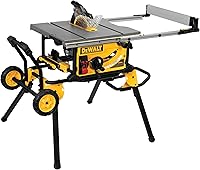
Best Table Saw for the Money: Entry, Mid and Premium
The best table saw for the money depends on the work you need it to do: choose a compact saw for easier storage, a folding-stand model for portability, or a wider-rip saw for larger sheet goods. A safety-focused option may suit buyers who put its contact-sensing system first.
On this page (7 sections)
- How should you compare table saw value?
- Which table saw is the best value for a compact shop?
- Is a folding-stand table saw worth the money?
- When is a wider-rip table saw worth paying for?
- Is a safety system worth the premium?
- What should you check before buying?
- How do you choose the best table saw for the money?
The best table saw for the money is the one whose capacity, storage setup and safety features match your regular cuts. For a compact option, compare the DeWalt DWE7485; for a folding stand, consider the SKIL TS6307-00; for wider sheet goods, look at the DeWalt DWE7491RS.
These picks cover different needs rather than one universal price ladder. Compare the features you will use, then check current prices before buying.
If you are still deciding between a portable saw and a larger shop setup, start with our plain guide to woodworking table saws. This guide also links to our contractor and hybrid saw overview for buyers considering a stationary machine.
How should you compare table saw value?
Compare capacity and useful features against the work you expect to do, not the price tier alone. Rip capacity, blade size, stand design, storage and safety features can change which saw makes sense for your shop.
| Saw | Blade | Rip capacity | Setup feature | A fit to consider |
|---|---|---|---|---|
| DeWalt DWE7485 | 8-1/4 in | 24.5 in | Compact size and onboard storage | Limited storage and sheet goods |
| SKIL TS6307-00 | 10 in | 25-1/2 in | Integrated folding stand | A portable setup |
| DeWalt DWE7491RS | 10 in | 32-1/2 in | Foldable rolling stand | Wider rips and larger materials |
| SawStop CTS-120A60 | 10 in | Not specified here | Contact-sensing safety system | Buyers prioritizing that feature |
The rip capacity figures come from each model's stated features. They describe the width available for ripping, but do not tell you how well a saw will support every large panel; plan outfeed support and safe handling too.
Consider what you can store and move. A compact footprint may be more useful than extra capacity if the saw must be put away after each project.
Our table saw space guide can help you plan the saw's working area and material support before you choose.
Which table saw is the best value for a compact shop?
The DeWalt DWE7485 suits a buyer who values compact storage and still needs sheet-good capacity. It has 24.5 inches of rip capacity, telescoping rack-and-pinion fence rails and onboard storage for key accessories.
Its compact size helps with transportation and storage, while the metal roll cage base is designed for jobsite durability. The power-loss reset feature prevents accidental restarts after a power disruption when the saw is left on.
The included guarding system allows tool-free adjustments, and the saw comes with a riving knife and anti-kickback pawls. Those parts still need to be installed and used as directed.
Choose it if storage space matters and 24.5 inches of rip capacity covers your usual cuts. For more context on blade-size trade-offs, read our 8-1/4 inch vs 10-inch table saw guide.
Is a folding-stand table saw worth the money?
A folding-stand saw can suit a shop that needs a setup that folds for storage or transport. The SKIL TS6307-00 combines 10-inch blade size, 25-1/2 inches of rip capacity and integrated folding legs.
The saw includes parallel blade alignment adjustment, which lets you align the blade with the rip fence and miter slot. It also has a dust port elbow, a 4x4 cutting capacity at 90 degrees and bevel settings between 0 and 45 degrees.
Its stated weight is 51.2 lb, so consider whether you can lift and move it comfortably even with folding legs. The included stand makes setup more convenient, but you still need room to handle long stock safely.
Choose it if you want a 10-inch saw with folding legs and the listed capacity fits your work. Our best table saws with stands guide covers more stand-focused choices.
When is a wider-rip table saw worth paying for?
A wider-rip saw may be worth considering when you regularly cut broad panels or long shelving stock. The DeWalt DWE7491RS has a stated 32-1/2 inch rip capacity and a rolling stand that folds for setup and breakdown.
Its rack-and-pinion fence adjusts along telescoping rails, and a flip-over fence supports narrow rip cuts. The saw also has a material support feature for narrow cuts and a 2-1/2 inch dust collection port for connection to a vacuum.
At 110 lb, it is much heavier than the two compact jobsite options here, so think about where it will live and how you will move it. The rolling stand supports transport around a work area, but it does not remove the need to plan the route and storage space.
Choose it when its wider rip capacity solves a regular cutting need. If your work is mainly furniture or cabinetry, see our best table saws for woodworking guide for more options.
Is a safety system worth the premium?
A contact-sensing safety system may be worth considering if that feature is a high priority in your buying decision. SawStop says its CTS-120A60 system stops on contact with skin, and the saw has a rack-and-pinion fence plus quick blade tilt with micro-adjustment.
The product is described as a portable, heavy-duty saw for home or jobsite use. Its listed weight is 79 lb, so factor that into storage and moving plans.
This is a different value calculation from buying more rip capacity or a stand. Compare the safety system and the rest of the saw's features with your budget, and read the manual before setup and use.
Choose it if the contact-sensing system is central to your decision. For a broader look at guards, riving knives and brakes, read our table saw safety features guide.
What should you check before buying?
Check the cut capacity, available workspace and included setup features before you order. A saw that looks like good value on paper may not fit your regular materials or storage plan.
Use this short list:
- Measure your storage area and the saw's working footprint.
- Compare rip capacity with the widest material you plan to cut.
- Check whether the stand is integrated, rolling or sold separately.
- Confirm the guard, riving knife and anti-kickback parts included with the model.
- Plan infeed and outfeed support for large panels.
- Compare the saw's weight with your ability to move and store it.
- Check power, setup and maintenance instructions for the exact model.
A table saw needs enough room for you and the workpiece to move without obstruction. Our contractor table saw guide explains how that saw style fits into a shop.
How do you choose the best table saw for the money?
Choose the DWE7485 for compact storage, the SKIL TS6307-00 for folding legs, or the DWE7491RS for more rip capacity and a rolling stand. Consider the SawStop if its contact-sensing system is a key feature you want.
Match the saw to the cuts and space you can name today. For a stationary option, compare the trade-offs in our hybrid table saw guide.
Frequently asked questions
What is the best table saw for the money?
The best value depends on your work and setup. A compact 8-1/4 inch saw can suit limited storage, while a 10-inch saw with a folding stand adds a built-in way to move and store it.
If you often cut wide sheet goods, compare rip capacity and support before choosing.
Is a 10-inch table saw worth more than an 8-1/4 inch saw?
A 10-inch saw may be worth the added cost if you need its blade size or the model's other features. The DeWalt DWE7485 has an 8-1/4 inch blade and 24.5 inches of rip capacity, while the SKIL TS6307-00 has a 10-inch blade and 25-1/2 inches of rip capacity.
Should I buy a table saw with a stand?
A saw with an integrated or rolling stand can suit a shop where you need to fold or move the setup. The SKIL TS6307-00 has folding legs, and the DeWalt DWE7491RS includes a rolling stand.
Check the saw's full footprint and weight against your storage and moving routine.
Does a more expensive table saw make safer cuts?
Price alone does not tell you how safe a saw is to use. Compare the guard, riving knife, anti-kickback features and operating instructions, then use safe work practices.
SawStop says its patented system stops the blade on contact with skin; that feature does not replace guarding or careful use.