What Is a Contractor Table Saw and Who Needs One?
A contractor table saw suits regular shop work when you have room to keep it set up. Choose by footprint, mobility, fence, capacity, motor details, and safety features, since the label covers machines with very different layouts.
On this page (8 sections)
- What is a contractor table saw?
- Who should buy a contractor table saw?
- How does a contractor table saw compare with a jobsite saw?
- How does a contractor saw compare with a hybrid saw?
- How do you choose a contractor table saw?
- How should you set up and care for a contractor table saw?
- Which contractor table saw should you choose?
- Related guides
A contractor table saw suits regular shop work when you have room to keep it set up. Choose by footprint, mobility, fence, capacity, motor details, and safety features, because saws in this category vary widely.
The name can describe a heavy shop machine or a more portable model with a stand. Focus on the actual saw and how it fits your work rather than assuming every contractor model shares the same layout.
What is a contractor table saw?
A contractor table saw is a corded machine for woodworking, with a table and fence for rip cuts and a miter gauge for crosscuts. Some models are built for a fixed shop setup, while others are light enough to move or store between jobs.
The differences show up in weight and footprint. The SawStop CNS175 weighs 256 lb and measures 61.75 x 40.5 x 34.75 in, while the JET ProShop II weighs 235.7 lb and measures 60 x 40 x 43 in.
By comparison, the Delta 36-6023 weighs 77 lb and measures 27 x 19 x 35 in. The DeWalt DWE7491X weighs 87 lb and includes a scissor stand.
These examples show why weight and dimensions are more useful than the category name alone. For more shop-oriented options, see our guide to woodworking table saws for a home shop.
Who should buy a contractor table saw?
Buy a contractor table saw if you make regular cuts in a shop and can leave the saw set up. A fixed work area suits furniture, cabinet, and shelving projects where you want a consistent place to make repeat cuts.
It can also suit a small business with a dedicated work area. Think about the stock you handle, the support you need around the saw, and whether you'll have to move it during a typical workday.
Skip a heavy shop model if the saw has to be carried between job sites or cleared away after each project. A portable saw may fit better when storage and mobility matter most; our cordless table saw guide covers one option for work where portability and power access are priorities.
How does a contractor table saw compare with a jobsite saw?
A contractor table saw is usually intended for shop work, while a jobsite model is designed to move. Compare weight, storage, setup, and board support to see which one fits your work routine.
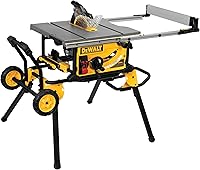
The DeWalt DWE7491X illustrates the portable end of this group. Its 87 lb weight and scissor stand make it easier to move or store than the much heavier SawStop and JET models.
Its 32-1/2 in rip capacity can help with larger shelving and trim stock. Plan for safe support when cutting long or wide pieces.
For help sizing the fence to your work, read how much rip capacity you need on a table saw.
How does a contractor saw compare with a hybrid saw?
A contractor saw is generally shop oriented, while a hybrid table saw combines traits associated with contractor and cabinet saws. Brands use these labels differently, so compare the actual features and dimensions.
The JET ProShop II is described as a contractor-style machine with features associated with higher-end cabinet saws. It has steel wings, a quick-release riving knife, a blade guard, and storage for included accessories.
The Delta 36-6023 is a lighter alternative with an included stand and a rack-and-pinion fence system. It weighs 77 lb and has a 32-1/2 in rip capacity, making it easier to consider for a shop that needs to move or store the saw.
Read our guide to hybrid table saws if you're deciding between a lighter contractor style and a more shop-focused design.
How do you choose a contractor table saw?
Choose by matching the saw's footprint, mobility, fence, capacity, power, and safety features to the cuts you make. Start with your shop layout, then narrow the options by the stock and support your projects require.
Will the saw fit your shop?
Measure the saw's footprint and the full path needed to feed and remove your longest boards. Leave room at the controls, and check that stock can move without hitting walls, vehicles, or stored tools.
A clear work path matters as much as the table dimensions. Our guide to how much room a table saw needs in a garage shop explains what to consider when planning a layout.
Does the fence fit your work?
A fence guides stock during rip cuts, so look for a system that adjusts and locks securely. Longer rip capacity helps with wider stock, but you still need support to handle it safely.
The Delta 36-6023 and DeWalt DWE7491X each have 32-1/2 in rip capacity and rack-and-pinion fence systems. The SawStop CNS175 has a 30 in Premium Fence System, which suits buyers who value its smooth operation and secure lockdown.
Can the motor handle your cuts?
Match motor details and blade choice to the materials and cut depth you need. The SawStop and JET are 1.75 HP models, while the Delta and DeWalt use 15 A motors.
Horsepower and amperage are different measures, so don't compare their numbers as though they were equivalent. Our guide to how much power a home shop table saw needs can help you think through motor needs for your work.
Which safety and dust features matter?
Check whether the saw includes a blade guard and riving knife, and follow the manual when setting them up. The SawStop CNS175 adds a skin-contact brake system, while the JET ProShop II includes a quick-release riving knife and blade guard.
The DeWalt DWE7491X has tool-free adjustments for its guarding system and a 2-1/2 in dust collection port. A port needs a compatible vacuum or dust collection system, so plan for that connection when you set up the saw.
How should you set up and care for a contractor table saw?
Set up the saw on a stable surface, follow the manual, and check that the fence and blade are aligned before making accurate cuts. Confirm that the guard and riving knife are installed for the cut, and arrange infeed and outfeed support before feeding long stock.
Keep the blade clean and sharp for the material you're cutting, and disconnect power before changing blades or making adjustments. Use the push stick when the cut calls for it, and connect dust collection when the saw has a port.
Common mistakes include buying by rip capacity alone, leaving too little room for boards, and removing safety parts without checking whether a cut requires them. Don't force stock through a cut or stand where a kickback could send it toward you.
Which contractor table saw should you choose?
Choose the SawStop CNS175 if you want a heavy shop saw with a 30 in Premium Fence System and a skin-contact brake system. Choose the JET ProShop II if you want a heavy contractor-style setup with steel wings, quick-release riving knife, and accessory storage.
Choose the Delta 36-6023 if you want a lighter saw with an included stand and 32-1/2 in rip capacity. Choose the DeWalt DWE7491X if you need a scissor stand, tool-free guarding adjustments, and a fence suited to wider stock.
For a contractor table saw, let your space and moving routine decide first, then compare the fence, capacity, power details, and safety features. If you're still weighing shop styles, start with our table saw selection guide.
Related guides
- Hybrid table saws
- Best table saws for woodworking in a home shop
- Table saw space needed in a garage shop
- Table saw horsepower for a home shop
Frequently asked questions
What is a contractor table saw?
A contractor table saw is a corded saw built for woodworking, but the label does not guarantee a particular weight, base, or motor. Compare the machine's footprint, fence, rip capacity, safety parts, and included stand with your projects and shop before you choose.
Is a contractor table saw good for a home shop?
Yes, if you have a place to keep it set up and need a saw for regular woodworking. Measure the saw and the room needed to feed and support long stock.
If you need to move or store it often, a jobsite saw with a folding stand may suit your routine better.
What is the difference between a contractor and hybrid table saw?
A contractor saw is generally shop oriented, while hybrid saws combine traits associated with contractor and cabinet saws. Names vary by brand, so compare weight, footprint, motor details, fence, dust collection, and included safety parts instead of relying on the category label.
Can a contractor table saw cut hardwood?
Yes, when the saw, blade, and setup suit the hardwood and cut. Use a sharp blade made for the job, support the stock, feed it steadily, and follow the saw manual.
Don't force stock through a cut if the blade slows or the material starts to bind.