Cabinet Saw vs Table Saw: Which Do You Need? (November 2026)
Choose a cabinet saw for a permanent shop and a jobsite table saw for portability. In a cabinet saw vs table saw decision, your workspace, material size and need for mobility decide the better fit.
On this page (12 sections)
- Cabinet saw vs table saw: what is the main difference?
- Which saw gives you the better work surface?
- Which option is easier to move and store?
- Which saw handles larger sheets better?
- How much room does each setup need?
- Which saw gives better dust control?
- Which fence and alignment features matter?
- Who should choose the SKIL jobsite saw?
- Who should choose the DeWalt compact saw?
- Is a cabinet saw worth it for your shop?
- Can a hand saw cover smaller tasks?
- What is the final cabinet saw vs table saw choice?
Choose a cabinet saw for a permanent shop and a portable table saw for flexible work areas. In a cabinet saw vs table saw comparison, the right answer depends on stability, dust control, material size and whether the saw must move.
A cabinet saw is built around a fixed shop setup. It usually makes the most sense when you have room for infeed and outfeed support, a dedicated power arrangement and a dust collection plan.
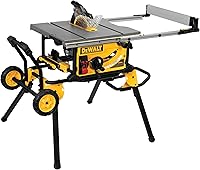
A portable table saw makes more sense when you work in a garage, move between sites or need to store the tool after each project. The SKIL TS6307-00 and DeWalt DWE7485 show how portable table saws differ in capacity and storage needs.
The overall winner for most readers in this comparison is the SKIL TS6307-00 10-Inch Jobsite Saw. It has a 15 Amp motor, a 10-inch blade, a 25-1/2-inch rip capacity and an integrated folding stand.


Cabinet saw vs table saw: what is the main difference?
A cabinet saw favors a permanent, stable workstation, while a portable table saw favors transport and storage. Both use a table and fence to guide stock across a blade, but the supporting structure changes how you plan the shop.
A cabinet saw normally sits in one place and becomes part of the workshop layout. Its weight and enclosed base make it a natural match for fixed dust collection, large outfeed tables and repeat work.
A portable table saw combines the saw, motor and support system into a smaller package. Some models have folding legs, while others use a compact base that you place on a bench or stand.
The difference is not simply power. A portable saw can have a 15 Amp motor, as both featured models do, yet still be easier to carry than a cabinet saw because the frame and table are smaller.
For a first table saw, use this table saw horsepower guide to match motor needs to the stock you plan to cut. Motor rating matters, but it does not tell you how much room, support or dust control the complete setup requires.
Which saw gives you the better work surface?
A cabinet saw gives you the better permanent work surface; a portable table saw gives you a work surface you can rebuild around each job. Your choice should follow the kind of stock you cut most often.
A fixed shop can include an outfeed table that stays aligned with the saw. That makes long boards and sheet goods easier to support while you maintain control through the cut.
Portable saws need a deliberate support plan. The SKIL includes an integrated folding stand, while the DeWalt uses a compact design with a metal roll cage base and on-board storage.
The BORA Workhorse X Saw Horses 2 Pack can support a mobile work area around a portable saw. Its pair has a 2,700-pound capacity, folding steel legs and pre-drilled 2x4 brackets for building a connected workstation.
Avoid treating capacity as a reason to place the sawhorses directly into every saw setup without planning. The saw, support top and material must remain level and stable, with enough room for you to feed and receive the work.
Which option is easier to move and store?
The portable table saw wins for movement and storage. A cabinet saw earns its place by staying ready, while a portable saw earns its place by leaving the way when the job is done.
The SKIL weighs 51.2 pounds and has folding legs that form an integrated stand. That combination suits a garage shop that must return to parking or another use after woodworking.
The DeWalt weighs 54 pounds and measures 22.75 x 22.75 x 13 inches. Its compact dimensions and on-board storage for the blade guard, fence, wrenches and miter gauge help keep the saw's accessories together.
The DeWalt is the better portable choice when storage dimensions matter more than the last inch of rip capacity. Its 24.5-inch capacity still handles 4x8 plywood or OSB sheets.
The SKIL is the better portable choice when you want a larger blade and slightly more capacity with a folding stand. It has a 10-inch blade, compared with the DeWalt's 8-1/4-inch blade.
Which saw handles larger sheets better?
The SKIL is the stronger portable pick for large sheet work because its rip capacity is 25-1/2 inches. The DeWalt follows closely at 24.5 inches and also supports ripping 4x8 plywood or OSB sheets.
Rip capacity tells you how far the fence can sit from the blade. That number matters when you split wide panels, but it does not remove the need for outfeed support and a safe feed path.
The extra inch on the SKIL is useful when a cut falls near the limit of a smaller saw. It also gives the 10-inch blade more presence for general shop work.
The DeWalt's 24.5-inch capacity remains practical for many sheet-goods cuts. Its telescoping rack and pinion fence rails make quick adjustments easier when the material size changes.
Read this guide to table saw rip capacity before deciding that a wider number automatically means a better saw. Measure your regular panels, then add the space needed to support them before and after the blade.
How much room does each setup need?
A cabinet saw needs the larger permanent work zone, while a portable saw needs a clear temporary zone each time you use it. Storage footprint and operating footprint are different measurements.
The DeWalt's 22.75 x 22.75 x 13-inch dimensions describe a compact machine, not the full space needed for a sheet of plywood. The SKIL's 28.74 x 27.17 x 16.93-inch dimensions also describe the saw and stand, not every working direction.
A cabinet setup can occupy less room than a portable saw during one cut if it already has a planned table system. It can also consume more of the room once dust collection, stock storage and walking paths are included.
Mark the saw's footprint with tape. Then mark the longest board or sheet you expect to cut, leaving space for your hands and a helper if the material requires one.
This guide to table saw space requirements can help you separate storage space from cutting space. A small shop should choose the saw that leaves a usable path around the work, not just the model that fits when parked.
Which saw gives better dust control?
A cabinet saw usually fits a dedicated dust collection plan better, while the SKIL includes a dust port elbow for redirecting dust to a container. Dust control depends on the whole setup, not only the saw body.
A permanent cabinet installation can connect to fixed ducting and keep the collector near the tool. That arrangement is easier to leave ready when the saw is used often.
The SKIL's dust port elbow redirects dust to a container and helps keep cleanup closer to the cutting area. This is useful when the saw moves between storage and work.
Neither feature makes dust disappear. Keep the collection path clear, use the supplied guard and work in a space where dust can be collected without blocking your movement.
A portable saw can be the better dust-control choice in a shared garage because you can move it near a suitable container or outdoors when conditions allow. A cabinet saw can be better when the shop is dedicated and the ducting is already planned.
Which fence and alignment features matter?
Choose the SKIL when fast fence adjustment and parallel alignment are high priorities, and choose the DeWalt when compact rack and pinion control matters most. Both models use rack and pinion fence systems.
The SKIL has rack and pinion fence rails, parallel blade alignment and micro-adjustment so the blade can align with the rip fence and miter slot. Those details support repeat cuts when setup is correct.
The DeWalt has rack and pinion telescoping fence rails. Its Site-Pro Modular Guarding System allows tool-free adjustments of the guarding, and its power-loss reset helps prevent an accidental restart after a power disruption.
A cabinet saw can make sense when you want a fixed fence setup that stays adjusted between projects. A portable saw makes sense when you expect to fold, move or reset the tool.
Check the fence position before each cut and support the stock so it stays flat. A rigid saw does not compensate for a board that twists or a fence that is not set for the intended width.
Who should choose the SKIL jobsite saw?
Choose the SKIL TS6307-00 for a portable shop that still needs a 10-inch blade and wide sheet capacity. It is the strongest overall choice among the products here because it combines mobility with useful cutting range.
The 15 Amp motor, 10-inch blade and 25-1/2-inch rip capacity suit a broad set of shop tasks. Its 4x4 cutting capacity at 90 degrees also helps when the work includes heavier square stock.
The integrated folding stand is central to the choice. It lets the saw become a floor-standing tool for the cut and a more compact unit for storage.
The SKIL has a 0–45-degree bevel range with positive stops at 0 and 45 degrees. It also includes a blade guard, push stick, miter gauge, anti-kickback pawl, riving knife, rip fence and 24-tooth blade.
The trade-off is its 51.2-pound weight and larger operating footprint. Plan where the stand opens and where full sheets will rest before bringing the saw into the room.
Who should choose the DeWalt compact saw?
Choose the DeWalt DWE7485 when compact storage and a smaller machine matter more than maximum portable capacity. It gives you a 15 Amp motor and 24.5-inch rip capacity in a 22.75 x 22.75 x 13-inch package.
Its metal roll cage base supports jobsite durability, while the on-board storage keeps the guard, fence, wrenches and miter gauge with the saw. That is useful when the tool moves between a garage shelf and a work area.
The rack and pinion telescoping fence adjusts quickly. The Site-Pro Modular Guarding System supports tool-free guarding adjustments, and the power-loss reset prevents an accidental restart after a power disruption when the switch is left on.
The 8-1/4-inch blade is smaller than the SKIL's 10-inch blade. That makes the DeWalt the better fit for compact storage, not the best overall pick for every large-stock task.
Is a cabinet saw worth it for your shop?
A cabinet saw is worth the space when the saw stays set up and you make repeated cuts on a stable, organized bench system. It is a poor fit when every project requires moving the saw out of storage first.
Choose the cabinet format for a dedicated shop, frequent furniture work and a permanent dust collection plan. The fixed layout can make repeated cuts easier to organize because the support, fence and outfeed area stay in place.
Choose a portable table saw for a shared garage, rental workspace or jobsite rotation. The SKIL is the best match when you want a folding stand and larger portable capacity, while the DeWalt fits tighter storage.
A cabinet saw is not automatically the right first saw. If you still need to learn what stock you cut, how often you work and how much floor space you can give up, start with the portable format.
Use this guide on whether you need a table saw to decide if your projects call for a powered rip-and-crosscut tool at all. Small joinery and trim work may be better served by a hand saw and a stable bench.
Can a hand saw cover smaller tasks?
A hand saw complements either table saw type when the cut is small, local or flush. It does not replace a table saw for long rips, repeated widths or full sheet goods.
The RUITOOL Japanese Hand Saw 6 Inch Double has a 6-inch flexible SK5 high-carbon steel blade. One edge has 14 TPI teeth for softwood, while the other has 17 TPI teeth for hardwood.
Its beechwood handle and 0.11 kg weight suit small joinery and finish cuts. The three-sided hardened teeth are designed for chip removal and a smooth cut, while the pull-saw format gives you a different feel from a powered blade.
Use it for the jobs its size supports. A 6-inch hand blade is practical for trim and joinery, but it is not the tool for ripping a full plywood panel or producing many identical cabinet parts.
What is the final cabinet saw vs table saw choice?
Choose a cabinet saw for a permanent, high-use workshop, but choose the SKIL TS6307-00 for most readers who need a capable table saw that can move. Its 15 Amp motor, 10-inch blade, 25-1/2-inch rip capacity and folding stand give it the strongest balance here.
Pick the DeWalt DWE7485 when storage space is tight and 24.5 inches of rip capacity is enough for your panels. Pick the BORA Workhorse X when a portable saw needs a stronger temporary support system.
Keep the RUITOOL hand saw for small finish cuts, flush cuts and joinery. The cabinet saw wins for a fixed production-style layout, but the SKIL wins this cabinet saw vs table saw comparison for flexible home-shop use.
Frequently asked questions
Is a cabinet saw safer than a portable table saw?
Safety depends on the saw's guard, riving knife, switch, setup and your work habits. A cabinet saw's heavier base can stay steady, while a portable saw is easier to move out of a cramped area.
Keep the blade guard and anti-kickback equipment fitted as directed.
Can a portable table saw cut hardwood?
Yes, a portable table saw can cut hardwood when the blade, feed rate and setup suit the material. The SKIL TS6307-00 has a 15 Amp motor and the product data describes it as cutting hardwood, while its rack and pinion fence helps with alignment.
Do I need a cabinet saw for furniture making?
No. A cabinet saw is useful for repeated furniture work because a permanent setup favors stability and dust collection, but a portable table saw can handle many furniture cuts.
Choose by the size of your stock, available room and how often you need to move the tool.
Can a table saw replace a hand saw?
No. A table saw is better for repeatable straight cuts, while a hand saw is useful for small trim, joinery and flush cuts.
The RUITOOL Japanese Hand Saw has a 6-inch double-edge blade with 14 and 17 TPI teeth for those smaller tasks.
How much room does a cabinet saw need?
A cabinet saw needs space for the saw, infeed and outfeed support, walking paths and dust collection equipment. The exact footprint depends on the model and accessories.
Mark the full working area on your floor before choosing a permanent saw.