9 Best Table Saw Blades for Ripping (November 2026)
The best best table saw blades for ripping include the FOXBC 10-Inch Flat Tooth Ripping Table Saw for fast ripping, the DEWALT Table Saw Blade for clean general cuts, and the DEWALT 10 in. 24 Tooth General Purpose for mixed stock.
On this page (16 sections)
- Best table saw blades for ripping at a glance
- How we compared these ripping blades
- Which blade is best for fast ripping?
- Which blade suits mixed ripping and clean cuts?
- Is a 24-tooth general-purpose blade good for hardwood and plywood?
- Which ripping blade is best for glue-ups?
- Is a 2-pack of 40-tooth blades useful?
- Which table saw blade set covers ripping and finishing?
- Does a flat-tooth blade make the best rip cut?
- Are 40T and 60T blades useful in one set?
- Should you use a 60-tooth blade for ripping?
- What tooth count should you choose for ripping?
- How does kerf change a ripping blade?
- Do you need a separate blade for plywood?
- How should you support stock during a long rip?
- What is the final pick for the best table saw blades for ripping?
The best table saw blade for ripping for most woodworkers is the FOXBC 10-Inch Flat Tooth Ripping Table Saw, because its 24 flat teeth, 0.094-inch thin kerf and 5/8-inch arbor match the main needs of long cuts through wood. Choose the Freud for glue-ready edges, DEWALT for mixed stock, or WEN when you want two tooth counts.
Ripping means cutting along the length of a board, so the blade needs to clear chips quickly while keeping the cut straight. A low tooth count usually suits that job better than a fine-finish blade with many closely spaced teeth.
The right choice also depends on your saw. Match the 10-inch diameter and 5/8-inch arbor here to your machine, then compare kerf, tooth shape and the type of wood you cut most often.
Our guide to table saw blade sizes explains those fit points in more detail.
Our picks at a glance
-
1

-
2
-
3

- 4
 Check it
Freud Industrial Glue Line Ripping Saw Blade
Best for glue-ready edges - 5
 Check it
Luckyway 10 Inch Table Saw Blade 40T
Best for a 2-pack - 6
 Check it
WEN BL1032-2 10-Inch 32-Tooth and 60-Tooth Carbide-Tipped
Best for two cutting jobs - 7
 Best for flat-tooth rippingCheck it
- 8
 Check it
ANGELSWORD 10“ Table Saw Blade/Miter Saw Blade
Best for a two-blade mix - 9
 Check it
FOXBC 60-Tooth Thin Kerf Crosscut Blade
Best for the cleanest finish
Best table saw blades for ripping at a glance
The FOXBC 24-tooth blade is the overall pick because it combines a ripping-focused tooth count with the thinnest dedicated ripping kerf among the leading options here. DEWALT is the better fit for mixed cuts, while Freud is the choice for glue-up work.
Our score weighs the stated specs and features against the needs of someone shopping for a ripping blade.
| Product | Best for | Diameter | Teeth | Kerf | Our score |
|---|---|---|---|---|---|
| FOXBC 10-Inch Flat Tooth Ripping Table Saw | fast ripping | 10 inches | 24 flat teeth | 0.094 inches | 9.6 |
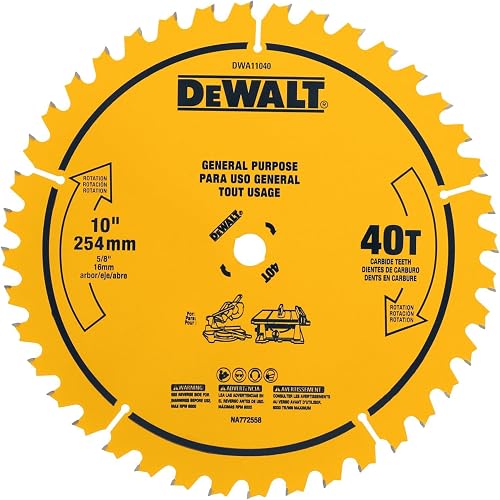
| DEWALT Table Saw Blade | clean general cuts | 10 inches | 40 | 9.5 | |
| DEWALT 10 in. 24 Tooth General Purpose | mixed stock | 10 inches | 24 | 9.4 | |
| Freud Industrial Glue Line Ripping Saw Blade | glue-ready edges | 10 inches | 30 | 0.25 inches | 9.3 |
| Luckyway 10 Inch Table Saw Blade 40T | a 2-pack | 10 inches | 40 | 9.0 | |
| WEN BL1032-2 10-Inch 32-Tooth and 60-Tooth Carbide-Tipped | two cutting jobs | 10 inches | 0.1 inches | 8.8 | |
| CMT Orange Tools 285.624.10 | flat-tooth ripping | 10 inches | 24 flat teeth | 0.126 inches | 8.3 |
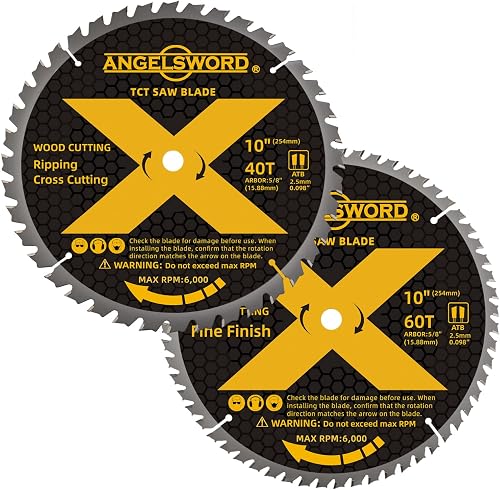
| ANGELSWORD 10“ Table Saw Blade/Miter Saw Blade | a two-blade mix | 10 inches | 0.098 inches | 8.1 | |
| FOXBC 60-Tooth Thin Kerf Crosscut Blade | the cleanest finish | 10 inches | 60 ATB teeth | 0.087 inches | 7.7 |
How we compared these ripping blades
The comparison starts with tooth count because ripping and crosscutting place different demands on a blade. The 24-tooth FOXBC, DEWALT and CMT options leave more space between teeth for clearing chips, while the 60-tooth FOXBC is aimed at fine crosscuts.
Kerf was the next major factor. Thin-kerf blades such as the FOXBC at 0.094 inches and the WEN at 0.1 inches remove less wood per pass than the Freud at 0.25 inches.
That makes them appealing for saws where reducing cut resistance matters.
Tooth shape also changes the job. Flat teeth suit dedicated ripping, while the FOXBC crosscut blade uses 60 ATB teeth for a cleaner finish across the grain.
The Freud uses a triple-chip tooth design for smooth ripping surfaces and glue work.
We also considered whether each blade gives you a useful shop setup. The WEN and ANGELSWORD sets cover two tooth counts, while Luckyway supplies two matching 40-tooth blades.
Those sets can reduce blade changes or give you a spare.
Which blade is best for fast ripping?
The FOXBC 10-Inch Flat Tooth Ripping Table Saw is the strongest fast-ripping choice because it has 24 flat teeth, a 0.094-inch kerf and a 20-degree hook angle. The thin kerf and low tooth count fit long cuts through hard and softwood.
FOXBC 10-Inch Flat Tooth Ripping Table Saw: Best for fast ripping
- 24 flat teeth
- 0.094-inch thin kerf
- 5/8-inch arbor
- 20-degree hook angle
A thin-kerf 24-tooth blade made for ripping hard and softwood. Its flat-tooth design also suits dado-like flat-bottom cut needs where that tooth shape is useful.
Pros
- Thin kerf
- Flat-tooth design
- Made for ripping
Cons
- Lower tooth count leaves a rougher edge than fine-finish blades
FOXBC gives this blade a direct ripping layout rather than a compromise between ripping and crosscutting. The 24 flat teeth leave generous gullets for clearing material during a long cut, while the 0.094-inch thin kerf removes less wood than the wider options in this group.
The 5/8-inch arbor fits the standard arbor size shared by the roundup. Its 20-degree hook angle is another detail aimed at wood cutting, and the blade is intended for hardwood, softwood, plywood, chipboard and laminates.
The thin kerf makes this a useful choice when you want less material removed from every pass. It also suits work with boards from 3/4 to 2-3/4 inches thick, while the product information says it can handle thinner or thicker material as well.
Compared with the DEWALT 40-tooth blade, FOXBC gives up some edge smoothness for more direct ripping focus. Compared with CMT, it keeps the flat-tooth layout but uses a narrower kerf.
Pick it for repeated long rips and general wood-shop work. Choose another blade when your main goal is a very smooth crosscut or glue-ready edge.
Which blade suits mixed ripping and clean cuts?
The DEWALT Table Saw Blade is the best middle ground for mixed work because its 40 teeth, optimized tooth geometry and ultra-sharp carbide support cleaner cuts without moving to a slow 60-tooth layout.
DEWALT Table Saw Blade: Best for clean general cuts
- 40 teeth
- Optimized tooth geometry
- Ultra-sharp carbide
- 10-inch diameter
This 40-tooth DEWALT balances ripping with a cleaner finish. It fits readers who want one blade for repeated wood cuts instead of a dedicated low-tooth rip blade.
Pros
- 40-tooth balance
- Ultra-sharp carbide
- Optimized tooth geometry
Cons
- Not as specialized for fast ripping as 24-tooth blades
The 40-tooth layout gives this DEWALT a more balanced role than the 24-tooth ripping blades. It has enough teeth for a cleaner edge on everyday wood cuts, while still keeping a lower count than the fine-finish options.
DEWALT describes the carbide as ultra sharp and the tooth geometry as optimized for increased accuracy. Those are useful features for a shop that cuts boards to size, makes shorter rips and occasionally needs a cleaner edge without changing blades for every task.
Its 10-inch diameter and single-blade format keep the choice simple for a standard 10-inch table saw. The alloy-steel body is another stated construction detail, while the blade is intended for wood.
The trade-off is specialization. The FOXBC 24-tooth blade is better matched to fast, long ripping, and the Freud is more focused on glue-line work.
The DEWALT wins when one blade needs to cover more routine cuts.
Choose it for a balanced everyday blade. It is the best fit here when your table saw handles both ripping and general sizing rather than only long board rips.
Is a 24-tooth general-purpose blade good for hardwood and plywood?
The DEWALT 10 in. 24 Tooth General Purpose is the right pick when ripping is part of a broader wood-cutting routine that includes hardwood, softwood, plywood, OSB and sheet material.
DEWALT 10 in. 24 Tooth General Purpose: Best for mixed stock
- 24 teeth
- Ultra-sharp carbide
- Optimized tooth geometry
- Compatible with hardwood, softwood, plywood and OSB
The 24-tooth DEWALT is aimed at broad wood-cutting use, including ripping and sheet goods. It is a practical choice when the table saw handles more than solid-board ripping.
Pros
- Broad material range
- 24-tooth rip-friendly layout
- Ultra-sharp carbide
Cons
- General-purpose focus gives it less specialization than the Freud
DEWALT gives this blade 24 teeth, placing it in the same rip-friendly range as the FOXBC and CMT options. The difference is its broader material description, which includes hardwood, softwood, plywood, OSB and sheet material.
That range matters if your table saw moves between solid boards and panels. A dedicated ripping blade is excellent for long grain cuts, but a general-purpose blade reduces the need to switch when the next job is a sheet good or a shorter sizing cut.
The blade also has optimized tooth geometry and ultra-sharp carbide. Those features are aimed at accuracy and clean cutting, while the 10-inch size fits the main machines this roundup covers.
Compared with FOXBC, this DEWALT has less specific ripping detail and does not use a stated flat-tooth design. Compared with the 40-tooth DEWALT, it gives you a more aggressive 24-tooth layout for removing material.
Pick it when your stock pile includes boards and panels. Use the FOXBC instead when dedicated flat-tooth ripping is the main job.
Which ripping blade is best for glue-ups?
The Freud Industrial Glue Line Ripping Saw Blade is the clear pick for glue-ready edges because its 30-tooth triple-chip design is built around smooth, true-cut ripping surfaces.
Freud Industrial Glue Line Ripping Saw Blade: Best for glue-ready edges
- 30 teeth
- Triple-chip tooth design
- Thick kerf and reinforced plate
- Anti-vibration slots
Freud pairs 30 teeth with a triple-chip design for smooth, true-cut ripping surfaces. Its thick kerf favors stability and glue-up work over the lower power demand of thin-kerf blades.
Pros
- Glue-line focus
- Triple-chip tooth design
- Perma-Shield coating
Cons
- Thick 0.25-inch kerf needs more saw capacity than thin-kerf options
Freud takes a different approach from the thin-kerf blades. This 10-inch blade has a 0.25-inch thick kerf, a reinforced plate and heavy-duty construction.
That wider cut favors stability and flatness, but it also makes the blade a more demanding choice than the 0.094-inch FOXBC.
Its 30-tooth triple-chip tooth design targets smooth ripping surfaces for glue-ups and finish work. The laser-cut anti-vibration slots are intended to reduce vibration and sideways movement, while the Perma-Shield coating reduces friction, heat buildup, pitch and resin accumulation.
The blade is optimized for material from 1/8 to 1 inch thick. That range makes it especially relevant to furniture parts and glue-line work rather than very thick construction stock.
Compared with the DEWALT 40-tooth blade, Freud is more specialized for a smooth rip edge. Compared with FOXBC, it gives up thin-kerf efficiency in exchange for a thicker plate and glue-line focus.
Choose Freud when the edge will go directly into a glue-up. Pick a thin-kerf blade when reducing cut width and saw load matters more than the smoothest rip surface.
Is a 2-pack of 40-tooth blades useful?
The Luckyway 10 Inch Table Saw Blade 40T is the best 2-pack for a shop that wants two matching general-purpose blades with a 0.1-inch kerf and 5/8-inch arbor.
Luckyway 10 Inch Table Saw Blade 40T: Best for a 2-pack
- Two blades
- 40 tungsten carbide tipped teeth
- 0.1-inch kerf
- 5/8-inch arbor
Luckyway gives you two 40-tooth blades for general-purpose wood cutting. The 0.1-inch kerf keeps it close to thin-kerf territory while the 40-tooth count favors a cleaner edge.
Pros
- Two-blade pack
- 40 carbide-tipped teeth
- 5/8-inch arbor
Cons
- Less specialized for aggressive ripping than 24-tooth blades
Luckyway supplies two 10-inch, 40-tooth blades for wood cutting. That gives you a spare in the same tooth count, which is useful when one blade needs cleaning or sharpening and you want to keep the same cut style.
The 0.1-inch kerf sits close to the thin-kerf options here. The tungsten carbide tipped teeth are intended for general-purpose wood cutting, and compatibility covers most 10-inch miter saws, jobsite saws and table saws.
A 40-tooth blade is a compromise by design. It cuts more cleanly than a 24-tooth rip blade, but it does not clear long rips as directly as the lower-tooth choices.
That makes Luckyway better for mixed shop work than for nonstop rough ripping.
Compared with WEN, Luckyway gives you two matching blades instead of two different tooth counts. Compared with the 40-tooth DEWALT, its main advantage is the spare blade in the pack.
Buy it when you want one general-purpose tooth count and a backup. Choose WEN if you need separate ripping and finishing layouts.
Which table saw blade set covers ripping and finishing?
The WEN BL1032-2 10-Inch 32-Tooth and 60-Tooth Carbide-Tipped set is the strongest choice for a shop that switches between general ripping and fine-finish work.
WEN BL1032-2 10-Inch 32-Tooth and 60-Tooth Carbide-Tipped: Best for two cutting jobs
- 32-tooth blade
- 60-tooth blade
- 0.1-inch kerf
- 5/8-inch arbor
This set covers general woodcutting with a 32-tooth blade and fine-finish work with a 60-tooth blade. It suits a shop that changes between ripping and cleaner finishing cuts.
Pros
- Two tooth counts
- Thin kerf
- Hardwood and softwood use
Cons
- The 60-tooth blade is less suited to fast ripping
WEN includes a 32-tooth blade for general woodcutting and a 60-tooth blade for fine-finish woodworking. That pairing gives you a practical division of labor: use the lower-tooth blade for ordinary rips, then move to the 60-tooth blade when the edge needs more refinement.
Both blades measure 10 inches and use a 5/8-inch arbor. The set also uses a 0.1-inch kerf, which keeps material removal close to the thin-kerf options in this roundup.
The blades are intended for hard and softwood and fit the majority of 10-inch miter saws, jobsite saws and table saws. That broad compatibility makes the set useful for a small shop with more than one saw type.
The trade-off is that the 32-tooth blade is not as aggressive for long ripping as the FOXBC or CMT 24-tooth blades. The 60-tooth blade is for finish work, not for making repeated fast rips.
Choose WEN when two cutting jobs matter more than one specialized blade. It is the best set here for a shop that wants a clear rip-versus-finish choice.
Does a flat-tooth blade make the best rip cut?
The CMT Orange Tools 285.624.10 is the best alternative for flat-tooth ripping when you want a dedicated 24-tooth blade but prefer a wider 0.126-inch kerf.
CMT Orange Tools 285.624.10: Best for flat-tooth ripping
- 24 flat teeth
- 0.126-inch kerf
- 5/8-inch arbor
- 15-degree hook angle
CMT offers a dedicated 24-flat-tooth ripping layout for table saw and chop miter saw use. It is a solid fit when flat teeth matter more than the thinnest kerf.
Pros
- 24 flat teeth
- Dedicated ripping layout
- 5/8-inch arbor
Cons
- Kerf is wider than the FOXBC and WEN options
CMT gives this 10-inch blade 24 flat teeth, a 5/8-inch arbor and a 15-degree hook angle. The flat-tooth layout places it firmly in the ripping group, where larger tooth spaces help remove material along the grain.
Its 0.126-inch kerf is wider than the FOXBC at 0.094 inches. That difference makes CMT less focused on minimizing cut waste, but the wider kerf is still a reasonable fit for a saw and setup designed around standard ripping blades.
CMT lists the blade for table saw and chop miter saw use. The product is made for woodworking, so it fits a reader who wants one dedicated 24-tooth option rather than a mixed-purpose set.
Compared with FOXBC, CMT offers the same tooth count and flat-tooth idea with a 15-degree hook angle, but it removes more material. Compared with Freud, it has fewer teeth and a simpler rip-focused design rather than a glue-line triple-chip layout.
Pick CMT when flat-tooth ripping is the priority and a 0.126-inch kerf fits your saw. Choose FOXBC when the narrower kerf is more useful.
Are 40T and 60T blades useful in one set?
The ANGELSWORD 10“ Table Saw Blade/Miter Saw Blade is the best two-blade mix for readers who want a 40-tooth general blade and a 60-tooth finish blade in one pack.
ANGELSWORD 10“ Table Saw Blade/Miter Saw Blade: Best for a two-blade mix
- 40-tooth and 60-tooth blades
- Two-pack
- 0.098-inch kerf
- 5/8-inch arbor
ANGELSWORD combines a 40-tooth blade and a 60-tooth blade for wood, plywood and moulding. The set favors flexibility and finish quality over dedicated high-speed ripping.
Pros
- 40T and 60T mix
- Thin kerf
- Two blades
Cons
- Neither blade is as rip-focused as a 24-tooth flat-tooth option
ANGELSWORD includes one 40-tooth blade and one 60-tooth blade. The 40-tooth option fits general wood cutting, while the 60-tooth option suits cleaner cuts on plywood, melamine, oak, pine and moulding.
Both blades use a 10-inch diameter and 5/8-inch arbor. The stated 0.098-inch kerf keeps the set in thin-kerf territory, close to the FOXBC rip blade and slightly below the 0.1-inch WEN and Luckyway options.
The set is compatible with DeWALT, Makita, Skil and Metabo 10-inch miter saws and table saws. That makes it useful where the same blade family needs to move between machines.
ANGELSWORD is less direct for dedicated ripping than the 24-tooth FOXBC and CMT blades. Its strength is flexibility: one blade covers routine cuts, while the other puts more teeth into the work for finish quality.
Choose this set for mixed wood projects with frequent finish cuts. Pick WEN if a 32-tooth blade is a better match for your ripping routine.
Should you use a 60-tooth blade for ripping?
The FOXBC 60-Tooth Thin Kerf Crosscut Blade is the right choice when clean crosscuts matter more than fast ripping, but it is not the overall pick for long rips.
FOXBC 60-Tooth Thin Kerf Crosscut Blade: Best for the cleanest finish
- 60 ATB teeth
- 0.087-inch kerf
- 5/8-inch arbor
- Fine-finish crosscut design
This FOXBC is a crosscut blade rather than a dedicated rip blade. Keep it for clean cuts across the grain, plywood, melamine and moulding when finish matters more than rip speed.
Pros
- Thinnest kerf here
- 60 ATB teeth
- Fine-finish focus
Cons
- Crosscut layout is a poor match for repeated aggressive ripping
This FOXBC has 60 ATB teeth and a 0.087-inch kerf, the narrowest kerf in the roundup. The alternating-top-bevel layout is suited to fine-finish crosscutting rather than clearing large amounts of material along the grain.
It fits most 10-inch miter saws and table saws with a 5/8-inch arbor. The blade is intended for oak, pine, melamine, plywood and moulding, so it earns a place in a shop that often cuts panels or trim.
The 60-tooth count gives you more teeth in the cut than the dedicated rip blades. That helps explain its finish focus, but it also makes it a slower match for repeated long rips where chip clearance matters.
Compared with the ANGELSWORD and WEN sets, FOXBC gives you a single, more specialized finish blade. Compared with the 24-tooth FOXBC, it trades ripping speed for a finer crosscut layout.
Keep it as a finish blade, not your main ripping blade. Choose it when the clean edge across the grain is the task that matters most.
What tooth count should you choose for ripping?
Choose 24 to 30 teeth for dedicated ripping, 32 to 40 teeth for mixed work, and 60 teeth for fine finishing rather than fast long cuts.
24 teeth: the direct ripping choice
The FOXBC, DEWALT 24-tooth and CMT blades all sit in the strongest range for long rips. Their lower tooth counts leave more room between teeth, which helps carry sawdust out of the cut.
Flat teeth make FOXBC and CMT especially direct ripping choices. The DEWALT 24-tooth blade is broader in its stated material range, so it is better when plywood, OSB and sheet goods share the schedule.
30 to 40 teeth: the balanced choice
Freud's 30-tooth blade is the specialist because its triple-chip design targets smooth glue-line surfaces. The DEWALT 40-tooth blade and Luckyway 40-tooth set are better middle-ground options for everyday wood cutting.
Choose 40 teeth when you want a cleaner edge than a 24-tooth blade without moving all the way to a 60-tooth finish blade.
60 teeth: the finish choice
The WEN, ANGELSWORD and FOXBC finish options use 60 teeth for cleaner work. Their layouts are more useful for crosscuts, plywood, moulding and finish surfaces than for repeated aggressive ripping.
If your projects alternate between long rips and clean crosscuts, a 2-blade set can be more useful than forcing one tooth count to do every job.
How does kerf change a ripping blade?
Kerf changes how much wood each cut removes, so thin-kerf blades reduce waste while wider blades can suit a saw built for more substantial cuts.
Thin kerf: less material per pass
FOXBC's dedicated rip blade has a 0.094-inch kerf, ANGELSWORD has 0.098 inches, and WEN and Luckyway have 0.1 inches. These measurements keep the cut narrow and make the blades attractive for repeated board processing.
The 0.087-inch FOXBC crosscut blade is even narrower, but its 60-tooth ATB design makes it a finish blade rather than the best ripping option.
Wider kerf: a different priority
CMT uses a 0.126-inch kerf, while Freud uses a 0.25-inch thick kerf. Freud pairs that wider cut with a reinforced plate and glue-line focus, so its value is smooth, stable ripping rather than saving every fraction of material.
Match the kerf to your saw and the work you do. A thin-kerf blade is the better starting point for reducing waste, while Freud suits glue-ups where edge quality takes priority.
Do you need a separate blade for plywood?
A separate plywood blade is useful when panel edges and finish quality matter as much as ripping speed. The FOXBC 60-tooth crosscut blade is the strongest finish-focused option here, while the 24-tooth DEWALT covers plywood as part of a broader material range.
Plywood has many layers, so a higher tooth count can give the edge a cleaner appearance. The 60-tooth FOXBC is designed for plywood, melamine and moulding, with a 0.087-inch kerf and ATB teeth.
For a shop that also rips solid boards, the DEWALT 24-tooth general-purpose blade is more versatile. It is compatible with hardwood, softwood, plywood, OSB and sheet material, so you do not need to change to a finish blade for every panel cut.
Read our guide to the best plywood blade for a table saw when panel cutting is a regular part of your work.
How should you support stock during a long rip?
Support the board before the cut, keep the feed path clear and use a table saw featherboard when the setup needs steady pressure against the fence.
Keep the board against the fence
A ripping blade works best when the board follows a consistent path. Set the fence for the cut, support the outfeed side and keep your hands away from the blade path as the board moves through.
The blade cannot correct a board that twists away from the fence. A steady feed also helps you compare how a 24-tooth blade behaves against a 40-tooth general-purpose option.
Use a featherboard for controlled pressure
A featherboard helps hold stock against the fence while you feed it. It is especially useful for long narrow rips where keeping even side pressure becomes tiring.
Our guide to the best table saw featherboard covers the accessory choice. The featherboard does not replace the blade decision, but it can make the ripping setup more consistent.
Match the blade to the cut
Use the FOXBC or CMT for direct 24-tooth ripping, Freud for glue-line work, DEWALT 40T or Luckyway for mixed cuts, and WEN or ANGELSWORD when your shop alternates between ripping and finishing.
What is the final pick for the best table saw blades for ripping?
The FOXBC 10-Inch Flat Tooth Ripping Table Saw is the best overall pick because it combines 24 flat teeth with a 0.094-inch thin kerf, a 5/8-inch arbor and a stated focus on ripping hard and softwood.
Choose the DEWALT 10 in. 24 Tooth General Purpose when plywood, OSB and sheet material are part of the same workload.
Pick the DEWALT Table Saw Blade for a more balanced 40-tooth blade, or choose Freud when a smooth glue-ready edge matters most.
The WEN set is the strongest flexible option because it gives you 32 and 60 teeth. Luckyway is the better 2-pack when you want two matching 40-tooth blades, while ANGELSWORD gives you a 40T and 60T mix.
Keep the FOXBC 60-Tooth Thin Kerf Crosscut Blade for clean crosscuts, plywood and moulding. For the best table saw blades for ripping, start with the 24-tooth FOXBC, then move to a specialized option only when your material or finish needs it.
Our top 3 picks at a glance
-
1
-
2
-
3
Frequently asked questions
Is a 24-tooth blade good for ripping?
Yes. A 24-tooth blade is a strong choice for ripping because its larger spaces between teeth clear sawdust quickly.
Flat teeth also leave a different cut shape from the alternating-top-bevel teeth used on many fine-finish blades.
What arbor size do these table saw blades use?
The products in this roundup use a 5/8-inch arbor. The arbor is only one fit check, so match the blade diameter, kerf and saw limits to your table saw before installing it.
What is the benefit of a thin-kerf ripping blade?
A thin-kerf blade removes less wood per cut, which reduces waste and the amount of material the saw must remove. The FOXBC 24-tooth blade has a 0.094-inch kerf, while the CMT blade has a 0.126-inch kerf.
Can one blade rip and crosscut wood?
Yes, a general-purpose blade can handle both jobs, but a dedicated ripping blade clears long-grain sawdust better and a fine-finish blade leaves a cleaner crosscut. Choose one blade for mixed work or keep separate blades for each task.


