Riving Knife vs Splitter: What Each One Does (October 2026)
A riving knife moves with the blade; a splitter stays fixed behind it. Both can help keep a cut open, but the right setup depends on your saw, blade and cut.
On this page (7 sections)
A riving knife moves with the blade; a splitter stays fixed behind it. Both can help keep a cut open, but the right setup depends on your saw, blade and cut.
The key difference is movement. A riving knife stays close to the blade as its height or angle changes, while a splitter remains at a set position.
Start with the owner's manual for your saw. It explains which safety parts fit and when they should be installed.


Riving knife vs splitter: how do they differ?
A riving knife follows the blade; a splitter does not. That changes how each one lines up with the cut when you move or tilt the blade.
A table saw blade removes a strip of wood called the kerf. As the workpiece passes the blade, wood behind the cut can press inward and pinch it.
A knife or splitter sits behind the blade to help hold that opening apart.
A riving knife mounts to the saw's blade assembly. Because it moves with the blade, its position can stay close to the teeth as the blade is raised or tilted, if the saw is designed for that setup.
A splitter mounts separately, often to an insert or the table. Its position stays fixed, so changing the blade height or angle can change how it lines up with the cut.
Neither name alone tells you whether a part fits your saw. Check the mounting method, blade setup and manual before buying or installing one.
Why does a riving knife move with the blade?
The moving mount keeps the knife's position tied to the blade. That can help it stay aligned as you change blade height or angle, depending on the saw's design.
The knife sits behind the blade and inside the cut path. For it to work as intended, it needs to align with the blade and suit the kerf the blade leaves.
Some saws have different knife or guard setups for different jobs. Check your owner's manual before removing or changing parts, especially for a cut where the blade does not pass all the way through the workpiece.
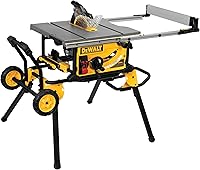
If you are replacing a missing part, match the exact saw model and part number. The DeWalt N030675 replacement riving knife is compatible with the DW745, DWE7480, DW745-B2, DWE7480-CA and DW745-CA.
When can a splitter make sense?
A splitter can be an option for a saw without a standard riving knife, if the splitter fits and aligns with the blade. Its separate mount means it stays in one position as the blade moves.
That fixed position affects what you can cut. The splitter needs enough clearance and the right alignment for the blade and workpiece, so it may not suit every blade height, angle or cut.
The MicroJig MJ Splitter Steel Pro Full Kerf is designed for full kerf blades and installs on a zero-clearance insert. It includes four splitter offsets and four Kerf Keepers; follow the installation instructions to align it with your blade.
A splitter is not a universal substitute for a riving knife. Before fitting one, check its instructions, your saw manual and whether the insert can support the setup.
Which one is better for your saw?
Choose the safety device your saw is designed to use and that matches your blade and cut. A built-in riving knife is the straightforward fit when your saw supports it and the knife is in good condition.
If your saw lacks a standard knife, a compatible splitter may be worth considering. Check how it mounts, whether it aligns with your blade and which cuts it can stay in place for.
Use these checks before you decide:
- Saw model: Find the model number and consult its manual.
- Mounting: Confirm the part attaches to the saw in the way its instructions require.
- Blade and kerf: Check that the safety device suits your blade and the opening it leaves.
- Cut type: Confirm the setup works for the cuts you plan to make.
- Alignment: Make sure the device sits behind the blade without rubbing it or the workpiece.
If any of those points are unclear, ask the manufacturer or a qualified repair shop before using the saw. A part that does not fit or line up correctly can create a new problem.
Our table saw safety features guide explains how a guard, riving knife and brake have different roles. For other setup decisions, see the plain guide to table saw setup.
Does either option prevent kickback?
A riving knife or splitter can help reduce one cause of kickback by helping keep the kerf open, but neither makes a cut risk-free. Kickback can have other causes, including poor workpiece control or a setup that does not suit the cut.
Keep the workpiece against the fence for a rip cut, use appropriate push tools when needed, and stand out of the likely kickback path. Follow your saw manual and use the guard and other safety equipment when the cut allows.
A splitter's fixed position makes alignment especially important. If it binds, rubs the stock or sits out of line with the blade, stop and correct the setup before continuing.
The zero-clearance insert guide covers how an insert fits around the blade. If you are adjusting the saw, use the steps in how to align a table saw blade and fence and follow your manual.
Can you use either one for every cut?
No. The right setup depends on the saw and cut.
A device that works for a through cut may interfere with a non-through cut, or may not be approved for that use.
A through cut passes the blade through the full thickness of the workpiece. Other cuts leave material attached beneath the kerf, and they can call for a different guard or knife arrangement.
Don't remove a safety part just because another saw uses a different setup. Check the instructions for your exact model and accessory, and don't force a workpiece past a part that blocks the cut.
If the manual calls for a specific part or setup, use it. For an unfamiliar cut, get help from a qualified instructor or repair professional before running the saw.
Riving knife vs splitter: which should you choose?
Pick a riving knife when your saw is designed for one; consider a splitter only when it is made to fit your saw and blade. The manual and correct alignment should decide the choice.
For a replacement, verify the saw model and part number first. For a splitter, check the mounting instructions, blade fit and cut limits before installing it.
Choose the DeWalt knife only for a compatible model named for N030675. Consider the MicroJig splitter if your saw lacks a standard knife, you use a full kerf blade and the insert mounting suits your setup.
- q: What is the main difference between a riving knife and a splitter? a: A riving knife moves with the blade as blade height or angle changes. A splitter stays fixed behind the blade, often mounted to an insert or table.
Both can help keep a kerf open, but a moving knife stays closer to the blade as its position changes.
- q: Can a splitter replace a riving knife? a: A splitter can serve a similar role by helping keep a cut open, but it is not automatically a direct replacement. Its mounting position and height are fixed, so check that it aligns with your blade and suits the cuts you make.
Follow your saw manual for approved safety equipment.
- q: Can you use a riving knife for non-through cuts? a: Some riving knives are designed to stay installed for certain non-through cuts, but this depends on the saw and knife. Check the owner's manual for the exact setup.
Never assume a knife can remain in place if the blade, guard or workpiece would interfere.
- q: Will any riving knife fit my table saw? a: No. A replacement knife needs to match the saw model and its mounting system.
Check the part number in your owner's manual, then confirm the replacement names your exact model or variant. A knife that looks similar may not mount or align correctly.
Frequently asked questions
What is the main difference between a riving knife and a splitter?
A riving knife moves with the blade as blade height or angle changes. A splitter stays fixed behind the blade, often mounted to an insert or table.
Both can help keep a kerf open, but a moving knife stays closer to the blade as its position changes.
Can a splitter replace a riving knife?
A splitter can serve a similar role by helping keep a cut open, but it is not automatically a direct replacement. Its mounting position and height are fixed, so check that it aligns with your blade and suits the cuts you make.
Follow your saw manual for approved safety equipment.
Can you use a riving knife for non-through cuts?
Some riving knives are designed to stay installed for certain non-through cuts, but this depends on the saw and knife. Check the owner's manual for the exact setup.
Never assume a knife can remain in place if the blade, guard or workpiece would interfere.
Will any riving knife fit my table saw?
No. A replacement knife needs to match the saw model and its mounting system.
Check the part number in your owner's manual, then confirm the replacement names your exact model or variant.
A knife that looks similar may not mount or align correctly.