Is a Table Saw a Power Tool?
Yes, a table saw is a power tool. It cuts wood with a motor-driven blade instead of arm strength, so it belongs in the same powered category as circular saws and miter saws.
On this page (8 sections)
- What makes a table saw a power tool?
- How does a table saw differ from a hand saw?
- Where does a table saw fit among other power saws?
- Is a table saw a power tool under shipping and safety rules?
- How do corded and cordless table saws fit the definition?
- What accessories does a table saw need as a power tool?
- Does a table saw count as a power tool in everyday use?
- What should you know before buying a table saw?
Yes, a table saw is a power tool: it uses a motor-driven blade rather than arm strength to cut wood. That one fact decides how it's classified, sold, shipped and used.
The question comes up because a table saw sits still while you move the wood past it, which feels different from holding a circular saw. The power source still makes it a power tool.
This matters when you buy, set up a shop, or follow safety rules. Understanding the "is a table saw a power tool" answer helps you pick the right machine and treat it with the respect any spinning blade deserves.
What makes a table saw a power tool?
A power tool is any tool driven by a motor or engine instead of muscle. A table saw qualifies because its blade spins under its own power.
The saw's table, fence and stand don't change that. They hold the work steady so your hands stay away from the blade, but the cutting force comes from the motor.
A 15-amp jobsite saw draws the same kind of power as a circular saw.
Stationary mounting is the only real difference. A table saw is a benchtop or floor-standing power tool, not a hand-held one.
The motor still does the work, so the classification holds.
That's also why the machine needs more setup than a hand saw. You align the blade and fence, check the riving knife and set the blade height before cutting.
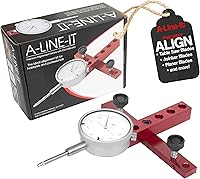
Our guide to how to align a table saw walks through that first setup.
How does a table saw differ from a hand saw?
A hand saw runs on your arm; a table saw runs on electricity. The difference shows up in speed, cut quality and the amount of physical effort each one demands.
A hand saw is light, quiet and needs no outlet. A table saw cuts faster, holds a straight line more easily over long boards and repeats the same width cut without marking each piece.
Its fence is the key: set it once and every rip comes out the same.
The trade-off is space and setup. A table saw needs a flat surface, blade changes and periodic alignment.
A hand saw needs a saw horse and a steady hand.
Neither is better in every shop. For a single shelf, a hand saw works.
For a set of cabinet parts, the table saw's repeatability saves time and material. That's the practical reason most home shops own one.
Where does a table saw fit among other power saws?
A table saw is a stationary power saw, alongside miter saws and band saws. It sits between hand-held saws and full shop machinery in how it's used.
- Circular saw: hand-held, moved over the wood, good for rough cuts and sheet goods.
- Miter saw: stationary, the blade swings down, best for crosscuts and angles on trim and lumber.
- Table saw: stationary, the wood moves past a fixed blade, best for long rips and repeat width cuts.
- Band saw: stationary, a continuous loop blade, best for curves and thick stock.
The table saw's strength is the rip cut: cutting a board along its length to a set width. A circular saw can do it with a straightedge, but the table saw's fence makes it repeatable and faster.
That's why a table saw often anchors a home shop. The other saws support it rather than replace it.
If you're choosing between machines, the table saw usually earns its space first.
Is a table saw a power tool under shipping and safety rules?
Yes, table saws are treated as powered woodworking equipment by retailers, carriers and safety bodies. That shapes how they ship and what rules apply in your shop.
A corded table saw runs on standard household voltage in the US. Shipping limits for powered tools and lithium batteries can affect cordless models.
Check the retailer's rules before ordering a cordless saw.
On the safety side, table saws fall under the same guard and blade rules as other powered saws. Use the blade guard, riving knife and anti-kickback pawls, and push sticks for narrow cuts.
These parts exist because the blade is motor-driven and unforgiving.
Read the manual for your model before the first cut. The setup steps, blade size and safety features vary between saws.
Which table saws suit a home shop or job site?
The SKIL TS6307-00 is the strongest all-round pick for most home shops and job sites. Its 15-amp motor, rack and pinion fence rails and integrated folding stand cover the basics well.
It cuts material up to 4x4 at 90 degrees and bevels from 0 to 45 degrees. The fence stays parallel to the blade, which matters for straight rips.
The folding legs make it easy to store.
For a smaller footprint, the DeWalt DWE7485 is the compact choice. For safety-focused buyers, the SawStop CTS-120A60 adds a brake system.
Each one is still a power tool, just aimed at a different shop.
How do corded and cordless table saws fit the definition?
Both corded and cordless table saws are power tools. The blade is motor-driven either way; only the power source changes.
A corded saw plugs into a wall outlet and usually delivers more consistent power for thick stock. A cordless saw runs on a rechargeable battery and trades some power for portability.
Neither is a hand tool.
For most home shops, a corded 15-amp saw is the safer default. It handles hardwood and long rips without battery drain.
Cordless models suit job sites without easy outlet access.
Check the motor rating on any saw you consider. Our guide to table saw horsepower explains how motor size affects the cuts a saw handles.
A motor-rated saw is a power tool by definition, so that spec is a useful buying signal.
What accessories does a table saw need as a power tool?
A table saw needs the guards and supports that go with powered cutting. These keep the blade safe and the work steady, and they matter more than on a hand saw.
The essentials ship with most saws: blade guard, riving knife, anti-kickback pawls and a push stick. Add a featherboard for narrow rips to hold the work against the fence.
See our picks for the best featherboards for table saws.
Long boards need outfeed support. A roller stand catches the wood as it leaves the blade and helps prevent binding and kickback.
Compare the best table saw roller stands before you cut sheet goods or long lumber.
Dust collection helps too. A dust port elbow redirects chips into a container, which keeps the shop cleaner and the blade path clearer.
None of these accessories change the classification, but they make a power tool easier to use safely.
Which compact table saw suits a small shop?
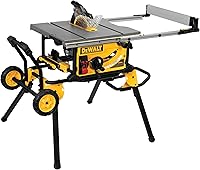
The DeWalt DWE7485 is the best fit for a small shop or garage where space is tight. Its compact size and metal roll cage base make it easy to store and move.
It has 24.5 inches of rip capacity, enough for 4x8 plywood or OSB sheets. The rack and pinion telescoping fence rails adjust fast and stay accurate.
On-board storage holds the guard, fence, wrenches and miter gauge.
The 15-amp motor turns at 5800 rpm, so it handles most common cuts. The smaller 8-1/4 inch blade means less depth of cut than a 10-inch saw, but the footprint is smaller too.
That's the trade-off for a compact power tool.
Which table saw is best for safety-focused buyers?
The SawStop CTS-120A60 is the pick for buyers who want a brake system as a priority. SawStop's patented safety system stops on contact with skin.
It's a 15-amp, 120-volt saw with a 10-inch carbide blade and a rack and pinion fence. The quick tilt and micro tilt-adjust make bevel changes easier.
Heavy-duty construction adds stability for smooth cuts.
It weighs 79 pounds, so it's heavier than the other two picks. That weight supports stability but makes it harder to carry.
For a shop where the saw stays put, that's a fair trade for the safety feature.
Does a table saw count as a power tool in everyday use?
Yes, in shops, classrooms and job sites it's treated as a power tool. That label shapes the safety training, the guards required and the way it's sold.
It's also why a table saw is regulated like other powered saws. Blade guards, riving knives and push sticks are standard equipment, not optional extras.
Treating it as a power tool means respecting the blade and the kickback risk.
The stationary table doesn't make it safer than a circular saw. If anything, the fence and table invite longer, more confident cuts.
Keep your hands clear of the blade path and use push sticks for narrow rips.
For anyone asking is a table saw a power tool, the answer stays the same in every setting. It's a motor-driven saw, so the same care and setup rules apply wherever you use it.
What should you know before buying a table saw?
Buy it as a power tool, not a piece of furniture. Check the motor rating, blade size, fence type and safety features before you choose.
The three picks here show the range. Pick the SKIL TS6307-00 for the best all-round balance of motor, fence and portability.
Pick the DeWalt DWE7485 when space is tight and a compact footprint matters more than cut depth. Pick the SawStop CTS-120A60 when the brake system is worth the extra weight.
Whichever you choose, set it up properly first. Align the blade and fence, fit the guards and add outfeed support for long boards.
A power tool rewards good setup with straight, repeatable cuts. Then confirm the answer to is a table saw a power tool by looking at the spinning blade: that's the motor doing the work, and that's what makes it one.
Frequently asked questions
Is a table saw the same as a circular saw?
No. A circular saw is held and moved over the wood, while a table saw stays put and you feed the wood past a blade mounted in a table.
They use similar spinning blades but different cutting motions and setups.
Does a table saw count as a power tool for shipping and safety rules?
Usually yes. Retailers, insurers and safety bodies treat table saws as powered woodworking equipment, so shipping restrictions, voltage requirements and blade guard rules that apply to power tools generally apply to them too.
Can a battery table saw be called a power tool?
Yes. Cordless table saws run on rechargeable batteries instead of a wall outlet, but the blade is still motor-driven.
Corded and cordless table saws are both power tools, and corded models remain the common choice for full-size work.