DeWalt DWE7485 vs DWE7485WS: Stand or No Stand? (November 2026)
Choose the DeWalt DWE7485 for the better overall value in a compact saw, or choose the DWE7485WS if you want the included stand. The dewalt dwe7485 vs dwe7485ws decision is mainly about portability, setup and the cost of adding a stable work height later.
On this page (12 sections)
- DeWalt DWE7485 vs DWE7485WS: what changes?
- Which saw is easier to carry?
- Does the included stand justify the DWE7485WS?
- Which model gives you the same cutting capacity?
- Which fence setup is easier to adjust?
- What safety features differ between the models?
- How do the two saws compare for storage?
- Which saw suits a small workshop?
- Which model suits repeated jobsite setup?
- Who should buy the DWE7485?
- Who should buy the DWE7485WS?
- Final verdict: which DeWalt saw should you choose?
Choose the DeWalt DWE7485 for the better overall compact setup, or choose the DWE7485WS when you want the included stand. In the dewalt dwe7485 vs dwe7485ws comparison, both saws offer a 24.5 in. rip capacity, so the main choice is how you want to support and move the saw.
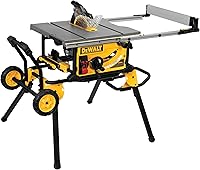
The DWE7485 weighs 54 lb and has a compact portable design with a metal roll cage base. The DWE7485WS weighs 66 lb and pairs the saw with a jobsite table saw stand.
Both use a corded electric power source and are built around the same 8-1/4 in. saw format. The DWE7485WS wins for a ready-height setup, but the lighter DWE7485 wins overall for buyers who already have support or want the easiest machine to carry.


DeWalt DWE7485 vs DWE7485WS: what changes?
The included stand is the main difference between these 2 models. The DWE7485 is the compact saw by itself, while the DWE7485WS includes a jobsite table saw stand.
| Feature | DWE7485 | DWE7485WS |
|---|---|---|
| Product name | DeWalt DWE7485 8-1/4 Inch Compact Saw | DeWalt DWE7485WS 8-1/4 Inch With Stand |
| Rip capacity | 24.5 in. | 24.5 in. |
| Listed weight | 54 lb | 66 lb |
| Power source | Corded Electric | Corded Electric |
| Fence | Rack and pinion telescoping fence rails | Rack and pinion telescoping fence rails |
| Guarding or safety features | Site-Pro Modular Guarding System, anti-kickback pawls, non-thru cut riving knife | Anti-kickback pawls, non-thru cut riving knife, Modular Guard System, blade brake |
| Storage | On-board storage for guard, fence, wrenches and miter gauge | On-board storage for blade guard assembly, riving knife, pawls, wrenches, miter gauge and push stick |
The shared 24.5 in. rip capacity matters more than the model suffix for sheet work. Both are designed around the same compact 8-1/4 in. table saw size, so the stand, weight and listed feature differences should guide the choice.
The product information gives the DWE7485WS both 4300 rpm in its specifications and 5800 RPM in its description. Because those figures conflict, speed is not a useful reason to pick one model over the other.
Which saw is easier to carry?
The DWE7485 is the better carry choice because its listed weight is 54 lb. That is 12 lb less than the 66 lb listed for the DWE7485WS.
A 12 lb difference matters when the saw travels between a vehicle, a shed, a workshop and a jobsite. It also matters when you need to lift the saw onto a bench or move it out of the way after a project.
The DWE7485 has a compact size for transportation and storage. Its metal roll cage base gives the portable saw a defined outer frame for jobsite use, while on-board storage keeps the fence, guard, wrenches and miter gauge with the saw.
The lighter model still needs a suitable support surface. Set it on a firm, level base that leaves room for the workpiece and keeps the fence area clear.
If you often work alone or carry tools through narrow spaces, the DWE7485 earns the first pick. The DWE7485WS makes more sense when carrying the stand as part of the complete setup is worth the added weight.
Does the included stand justify the DWE7485WS?
Choose the DWE7485WS when an included jobsite table saw stand saves you setup time. Its main advantage is that the saw and stand arrive as one named package.
A stand can be useful when your work area has no permanent bench. It gives you a dedicated place to set the saw instead of making a temporary surface from whatever happens to be nearby.
The trade-off is the listed 66 lb weight. The DWE7485WS is still a portable table saw, but its complete package is heavier than the DWE7485 alone.
Think about how often you assemble and clear your work area. If you set up in a driveway, garage or changing jobsite, the included stand can make the DWE7485WS the simpler choice.
If you already own a sturdy bench or separate stand, the extra stand adds less value. In that situation, the DWE7485 keeps the purchase focused on the saw and gives you more control over the support arrangement.
For more options, compare the role of a table saw roller stand when long boards or sheet goods need support beyond the saw table.
Which model gives you the same cutting capacity?
Both models give you a 24.5 in. rip capacity, so neither wins on the stated sheet-ripping width. That capacity is intended for ripping 4x8 plywood or OSB sheets.
Rip capacity describes the space available for a cut between the blade and fence. It does not replace support behind or beside the saw, especially when a full sheet extends well beyond the table.
Plan the cut path before turning on the saw. The sheet should have a stable path as it enters the blade and continues past the fence.
A compact saw can handle a wide rip capacity, but the surrounding space still controls how comfortable the cut feels. A wall, vehicle or stack of materials can block the sheet even when the fence has enough adjustment.
Because both models share 24.5 in. of rip capacity, choose between them based on support and portability. The DWE7485WS does not provide a wider rip than the DWE7485.
Which fence setup is easier to adjust?
Both saws use rack and pinion telescoping fence rails, making the fence adjustment a shared strength. The system is designed for fast, smooth and accurate fence changes.
A fence should sit in the intended position before the cut begins. Move it in small adjustments, lock it securely and make sure the workpiece can travel without catching on nearby objects.
The telescoping rails also matter when the saw is stored. Keep the rails retracted or positioned so they don't create an unnecessary obstruction in a narrow workshop.
Fence accuracy depends on setup as well as the adjustment system. A saw that is not aligned can produce poor cuts even when the fence moves smoothly.
Use a straight reference and a careful setup routine before making important cuts. Our guide on how to align a table saw covers the alignment work that helps the fence and blade work together.
The fence system does not separate these models. The DWE7485 wins only if its lighter body better suits your routine, while the DWE7485WS wins if the included stand makes the same fence easier to use at a comfortable height.
What safety features differ between the models?
The DWE7485 and DWE7485WS both include guarding and anti-kickback parts, while the DWE7485WS also lists a blade brake. The DWE7485 includes the Site-Pro Modular Guarding System for tool-free guarding adjustments.
The DWE7485 package includes anti-kickback pawls, a miter gauge, a push stick, a 24T 8-1/4 in. blade, a non-thru cut riving knife, 2 blade change wrenches and a Modular Guard System.
The DWE7485WS package includes anti-kickback pawls, a miter gauge, a push stick, an 8-1/4 in. blade, a non-thru cut riving knife, 2 blade change wrenches and a Modular Guard System. It also lists a blade brake.
These parts support a deliberate setup. Keep the guard, pawls, riving knife and push stick stored with the saw so they are available when needed.
A riving knife is a distinct part with a specific role in keeping the cut path managed. The guide to riving knife vs splitter explains the difference and helps you identify which component you are using.
The DWE7485WS takes the safety-feature edge because of the listed blade brake. The DWE7485 still offers a defined guarding system and the same general class of support parts.
How do the two saws compare for storage?
The DWE7485 has the clearer storage advantage because its compact body and 54 lb weight are easier to place away. Its on-board storage is designed for the guard, fence, wrenches and miter gauge.
Storage matters when the saw is not used every day. A compact tool that has a dedicated place can be moved out of a walkway without separating the parts that make setup possible.
The DWE7485WS also has on-board storage for its blade guard assembly, riving knife, anti-kickback pawls, blade-change wrenches, miter gauge and push stick. Its stand adds a separate physical component to the complete setup.
Measure the place where the saw will sit when stored. The DWE7485 is listed at 22.75 x 22.75 x 13 inches, while the DWE7485WS is listed at 26.54 x 17.08 x 26.76 inches.
Those dimensions use different presentation formats, so treat them as model-specific measurements rather than a direct footprint comparison. Leave enough room to remove the saw, position the fence and handle sheet goods safely.
Which saw suits a small workshop?
Pick the DWE7485 for a small workshop with an existing bench or support surface. Its compact portable form and lower listed weight make it easier to store between projects.
A small shop often needs one tool to perform several jobs without staying in the middle of the floor. The DWE7485 can move to a work surface when needed, then return to storage after cleanup.
Its 24.5 in. rip capacity still supports the same stated 4x8 plywood or OSB sheet work as the DWE7485WS. The key question is whether your workshop already has a stable place for the saw.
Choose the DWE7485WS when your small workshop has open floor space but no useful bench. The included jobsite table saw stand gives the saw a dedicated support option, though the complete unit takes more room to move and store.
Don't treat compact size as permission to crowd the cutting area. Sheets need room to travel, and the operator needs a clear position beside the fence.
Which model suits repeated jobsite setup?
The DWE7485WS is the better repeated-setup choice when you need the included stand at each location. The stand removes one support decision from the setup process.
This matters for short jobs where building a temporary work surface would take too much time. Place the stand on a stable area, position the saw and organize the fence, guard and push stick before cutting.
The DWE7485 is better for a crew that already carries a preferred stand or bench system. Its lower listed weight is useful when the saw itself moves often, while the support equipment stays on site.
Both models have a metal or modular guarding arrangement, rack and pinion telescoping fence rails and a 24.5 in. rip capacity. The work result depends on the whole setup, not just the model name.
For either saw, keep the corded electric connection arranged so it does not cross the work path. A clean work area reduces distractions while the sheet moves through the cut.
Who should buy the DWE7485?
Buy the DeWalt DWE7485 if you want the lighter compact saw and already have support. Its 8.6 score makes it the overall winner in this comparison.
The DWE7485 fits a buyer who values easy carrying, compact storage and control over the bench or stand used underneath it. The 54 lb listed weight is the strongest practical reason to choose it.
It also suits a workshop where a permanent work surface is already available. You get the 24.5 in. rip capacity, rack and pinion telescoping fence rails, on-board storage and Site-Pro Modular Guarding System without choosing a stand as part of the named package.
Its trade-off is simple: you must provide the support surface. A weak, uneven or crowded bench can reduce the benefit of a lighter saw.
Choose this model for a portable setup you can adapt to different work areas. Pick the DWE7485WS instead when sourcing that support is the part you want to avoid.
Who should buy the DWE7485WS?
Buy the DeWalt DWE7485WS if the included jobsite table saw stand matters more than the lower carry weight. Its 8.2 score reflects a strong ready-height setup, but it is not the overall winner here.
The DWE7485WS is the practical pick for a buyer starting without a suitable bench or stand. The package keeps the 24.5 in. rip capacity and rack and pinion telescoping fence rails while adding the named stand.
Its listed 66 lb weight is the main trade-off against the DWE7485. Carrying the complete setup takes more effort, and the listed dimensions are different from those of the compact saw alone.
The DWE7485WS also lists a blade brake, which gives it a feature edge in this comparison. The DWE7485 has its own Site-Pro Modular Guarding System and on-board storage, so the choice is still mainly about the stand and carrying routine.
Choose the DWE7485WS for a dedicated jobsite setup. Choose the DWE7485 when you want the lighter saw and already know where it will stand.
Final verdict: which DeWalt saw should you choose?
The DeWalt DWE7485 is the better overall choice for most buyers because it scores higher, weighs less and keeps the same 24.5 in. rip capacity. The DWE7485WS is the right pick when the included jobsite stand is the feature that settles the decision.
Pick the DWE7485 for a small shop with a bench, a buyer who moves the saw often or anyone who wants to choose a separate support system. Its compact body, 54 lb listed weight and on-board storage make it the easier tool to put away.
Pick the DWE7485WS for repeated setup in places without a suitable work surface. The stand adds convenience, and the listed blade brake gives it a safety-feature advantage, but the complete package is 12 lb heavier.
The dewalt dwe7485 vs dwe7485ws decision is therefore a support question first. Choose the DWE7485 when you already have a stable base, and choose the DWE7485WS when having the stand included makes the saw ready for your work area.
Frequently asked questions
Is the DWE7485WS the same saw as the DWE7485?
The DWE7485WS is identified as a DeWalt 8-1/4 in. portable table saw with a stand, while the DWE7485 is the compact saw by itself. Both have a 24.5 in. rip capacity and rack and pinion telescoping fence rails.
Does the DWE7485 have a stand?
The DWE7485 package is the compact portable table saw, while the DWE7485WS includes a jobsite table saw stand. Choose the DWE7485 if you already have a suitable work surface or want to select your own stand.
Which DeWalt saw is easier to move?
The DWE7485 is the easier one to move by listed weight at 54 lb, compared with 66 lb for the DWE7485WS. The DWE7485WS adds the convenience of its included stand, but the complete setup is heavier.
Can both saws rip 4x8 plywood?
Both models have a 24.5 in. rip capacity, and that capacity is intended for ripping 4x8 plywood or OSB sheets. Support the sheet as it enters and exits the saw, using a stable setup suited to the work.
Which saw should I buy for a small workshop?
Choose the DWE7485 for a small workshop if you have a bench or stand that suits your space. Choose the DWE7485WS when the included jobsite stand saves you from sourcing a separate support setup.