9 Best Benchtop Table Saw for Woodworking (November 2026)
The best benchtop table saws for woodworking include the DeWalt DWE7491RS 10-Inch With Rolling Stand for most woodworking shops, the MarvTool 15Amp Portable Table Saw 10 inch for a lightweight 10-inch saw, and the SKIL TS6307-00 10-Inch Jobsite Saw for folding storage.
On this page (10 sections)
- Best benchtop table saws for woodworking by shop need
- How these benchtop table saws compare
- What should you check before choosing a benchtop table saw?
- Which benchtop saw is easiest to store and move?
- How much table saw capacity do woodworking projects need?
- What safety and dust features matter on a benchtop saw?
- Are band saws useful alternatives to table saws for woodworking?
- Is the WORX BladeRunner enough for woodworking?
- How should you set up a benchtop table saw?
- Verdict: which is the best benchtop table saw for woodworking?
The DeWalt DWE7491RS is the best benchtop table saw for woodworking overall because it combines a 32-1/2 in rip capacity, 15 amp motor, rack and pinion fence and rolling stand. The MarvTool is the better light-carry option, while the DeWalt DWE7485 makes more sense when storage space is tight.
A benchtop saw should match your work surface, stock size and setup habits. A large rip capacity helps with wide panels, but a compact body is easier to store and bring to the bench.
For a wider look at shop saws, read our guide to the table saw for woodworking. If you need a complete mobile setup, compare the table saw with stand options before choosing a bare saw.
Our picks at a glance
-
1
 Best for most woodworking shops
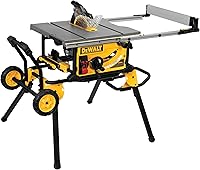
DeWalt DWE7491RS 10-Inch With Rolling Stand
9.0/10 our score
See it on Amazon -
2
 Best for a lightweight 10-inch saw
MarvTool 15Amp Portable Table Saw 10 inch
8.8/10 our score
See it on Amazon -
3

- 4
 Check it
DeWalt DWE7485 8-1/4 Inch Compact Saw
Best for small workspaces - 5
 Check it
SKIL SPT99-11 Worm Drive 10-Inch Saw
Best for deep cuts and large stock - 6
 Check it
Evolution R10TS 10-Inch Jobsite Saw
Best for multi-material work - 7
 Check it
SEESII Benchtop Band Saw for Woodworking
Best for curved woodworking cuts - 8
 Best for small metal and mixed-material workCheck it
- 9
 Check it
WORX BladeRunner WX572L Tabletop Saw
Best for light DIY cuts
Best benchtop table saws for woodworking by shop need
The DeWalt DWE7491RS is the best overall pick because it has the strongest mix of capacity, mobility and fence control. The other products earn their places by solving narrower needs, including folding storage, curved cuts, mixed materials and very light DIY work.
Our score weighs the stated specs and features against what woodworking buyers need from a compact saw. The products are ordered from highest score to lowest.
DeWalt DWE7491RS 10-Inch With Rolling Stand: Best for most woodworking shops
- 32-1/2 in rip capacity
- 15 amp motor
- Rack and pinion telescoping fence
- Rolling stand with wheels
- 2-1/2 in dust collection port
The DWE7491RS combines the largest rip capacity in this group with a rolling stand, fence adjustment system and 15 amp motor.
Pros
- Largest rip capacity here
- Rolling stand included
- Onboard storage for key parts
Cons
- Heaviest saw in the group
- Needs more room than compact tabletop models
MarvTool 15Amp Portable Table Saw 10 inch: Best for a lightweight 10-inch saw
- 28.3 lb portable design
- 15 amp motor
- 4,600 RPM
- 3.4 in cut depth at 90 degrees
- 0–45 degree cutting range
The MarvTool keeps a 10-inch blade and 15 amp motor in a 28.3 lb package for buyers who move a saw often.
Pros
- Lightest 10-inch table saw here
- Adjustable height and angle
- Dust port and blade guard included
Cons
- Less shop-support hardware than the top DeWalt
- No rolling stand included
SKIL TS6307-00 10-Inch Jobsite Saw: Best for folding storage
- Integrated folding stand
- 25-1/2 in rip capacity
- Rack and pinion fence rails
- 4x4 cutting capacity
- 0–45 degree bevel
The TS6307-00 gives a home shop a folding stand, useful rip capacity and parallel blade alignment without the bulk of the largest saws.
Pros
- Folding stand built in
- 4x4 cutting capacity
- Dust port elbow included
Cons
- Less rip capacity than the DWE7491RS
- Heavier than the MarvTool
DeWalt DWE7485 8-1/4 Inch Compact Saw: Best for small workspaces
- 24.5 in rip capacity
- 8-1/4 in blade
- Rack and pinion telescoping fence
- Metal roll cage base
- Power-loss reset
The DWE7485 is a compact jobsite saw with a 24.5 in rip capacity and a metal roll cage base for buyers who value storage space.
Pros
- Small footprint
- Power-loss reset
- Onboard storage
Cons
- Smaller blade than the 10-inch picks
- No stand included
SKIL SPT99-11 Worm Drive 10-Inch Saw: Best for deep cuts and large stock
- 3-5/8 in depth of cut
- 30-1/2 in rip capacity
- Worm drive gearing
- 16-inch wheels
- Outfeed and left support
The SPT99-11 is built around deep cuts, a large rip capacity and a rolling stand with wide wheels for bigger woodworking stock.
Pros
- Deepest stated cut here
- Large rip capacity
- Outfeed and left support included
Cons
- Heavy at 94.3 lb
- Larger than compact benchtop options
Evolution R10TS 10-Inch Jobsite Saw: Best for multi-material work
- 15 amp motor
- 26 in rip capacity
- 3-3/8 in maximum cut depth
- 0–45 degree bevel
- Zero-clearance throat plate and dado plate
The R10TS stands out for its zero-clearance throat plate, dado plate, cross-cut sled and stated ability to cut wood, mild steel, aluminum and composites.
Pros
- Dado plate included
- Zero-clearance throat plate
- Electronic blade brake
Cons
- Lower score for a wood-only shop
- No rolling stand included
SEESII Benchtop Band Saw for Woodworking: Best for curved woodworking cuts
- 8 in cutting width
- 3-1/8 in cutting height
- 0–45 degree tilting worktable
- Dual-sided fence
- 900 RPM blade speed
This is a benchtop band saw rather than a table saw, so it suits curved cuts, resawing and detailed work instead of long straight rips.
Pros
- Handles curved cuts
- Tilting worktable
- Dust port included
Cons
- Not a table saw for straight ripping
- Only 8 in cutting width
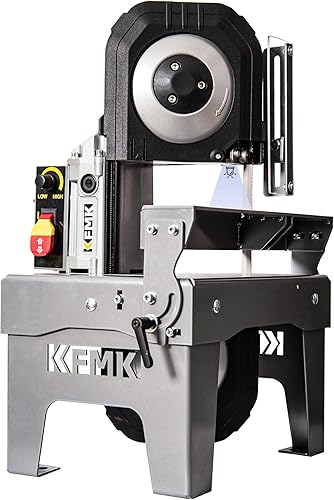
KFMK Tabletop Band Saw: Best for small metal and mixed-material work
- 5 in cutting capacity
- 137–472 FPM adjustable speed
- 10 amp motor
- Dual workbench design
- Eyeshield
The KFMK is a tabletop band saw aimed mainly at metal cutting, with adjustable speed and dual workbenches for small detailed work.
Pros
- Adjustable cutting speed
- Dual workbench design
- Compact tabletop format
Cons
- Not a table saw
- Metal-focused design is less suited to sheet-goods ripping
WORX BladeRunner WX572L Tabletop Saw: Best for light DIY cuts
- 14.7 lb portable design
- 5.5 amp motor
- 0–60 degree miter gauge
- 5 blades included
- Dust extraction port
The BladeRunner is a very light tabletop saw for small DIY cuts in wood, metal, tile, aluminum and plastic, not a replacement for a full-size rip saw.
Pros
- Lightest saw here
- 5 blades included
- Tool-free blade changes
Cons
- Lowest motor rating here
- Uses 4 in T-shank jigsaw blades
How these benchtop table saws compare
The main difference is not just blade size. Rip capacity, working height, stand design, weight, dust control and the type of cut each saw supports all change how useful it will be in a home shop.
| Product | Best for | Blade | Rip capacity | Weight | Our score |
|---|---|---|---|---|---|
| DeWalt DWE7491RS 10-Inch With Rolling Stand | most woodworking shops | 10 in, 24-tooth carbide blade included | 32-1/2 in | 110 lb | 9.0 |
| MarvTool 15Amp Portable Table Saw 10 inch | a lightweight 10-inch saw | 10 in, 36-tooth blade included | 28.3 lb | 8.8 | |
| SKIL TS6307-00 10-Inch Jobsite Saw | folding storage | 10 in, 24-tooth carbide blade included | 51.2 lb | 8.7 | |
| DeWalt DWE7485 8-1/4 Inch Compact Saw | small workspaces | 8-1/4 in, 24-tooth blade included | 24.5 in | 54 lb | 8.6 |
| SKIL SPT99-11 Worm Drive 10-Inch Saw | deep cuts and large stock | 10 in, 24-tooth carbide blade included | 30-1/2 in | 94.3 lb | 8.5 |
| Evolution R10TS 10-Inch Jobsite Saw | multi-material work | 10 in TCT blade included | 26 in | 7.6 | |
| SEESII Benchtop Band Saw for Woodworking | curved woodworking cuts | 8.2 | |||
| KFMK Tabletop Band Saw | small metal and mixed-material work | 7.9 | |||
| WORX BladeRunner WX572L Tabletop Saw | light DIY cuts | 14.7 lb | 6.9 |
The DWE7491RS has the widest rip capacity here at 32-1/2 in, followed by the SPT99-11 at 30-1/2 in. Those numbers matter when you work with shelving, trim, plywood or wide panels.
The DWE7485 gives up blade size and capacity to save space. Its 8-1/4 in blade and 24.5 in rip capacity still cover many common cuts, while its 54 lb weight keeps it easier to move than the 94.3 lb SKILSAW.
The MarvTool changes the balance again. At 28.3 lb, it is much easier to carry than the 51.2 lb SKIL TS6307-00, but the SKIL includes an integrated folding stand and offers a clearer jobsite setup.
The SEESII, KFMK and WORX models need a different reading. The SEESII and KFMK are band saws, while the WORX uses 4 in T-shank jigsaw blades.
They can support specific shop tasks, but they do not replace a conventional table saw for long, straight ripping.
What the motor figures tell you
Several of the full-size table saws use 15 amp motors, so the practical differences are not explained by amperage alone. Blade size, stated cutting depth, rip capacity and support features help separate a saw intended for wide stock from one designed mainly for compact setup.
The Evolution R10TS lists an 1,800-watt motor and a 3-3/8 in maximum cut depth. The WORX BladeRunner lists 5.5 amps and uses short T-shank jigsaw blades, which places it in a lighter DIY category even though it can work with several materials.
How blade systems change the work
The standard 10-inch circular blades on the DWE7491RS, MarvTool, SKIL TS6307-00 and SPT99-11 are suited to the straight ripping and crosscutting expected from a table saw. The DWE7485 uses a smaller 8-1/4 in blade, while the Evolution uses a 10-inch TCT blade and adds a dado plate.
The band saws work differently because the continuous blade and open cutting path support curves and detail work. The WORX also differs from the circular-blade models because its 4 in T-shank jigsaw blades make it a small, flexible DIY tool rather than a conventional sheet-goods saw.
What should you check before choosing a benchtop table saw?
Start with the largest material you expect to cut, then choose a saw with enough capacity and a setup you can use safely. A larger motor alone does not make a compact saw the right fit for your shop.
Match rip capacity to your stock
Rip capacity measures how far the fence can sit from the blade. The DWE7491RS gives you 32-1/2 in, which leaves more room for wide shelving and sheet materials than the 24.5 in DWE7485.
The SKIL TS6307-00 reaches 25-1/2 in, while the Evolution R10TS reaches 26 in. Those capacities suit many trim, board and panel tasks without needing the largest frame in the group.
Consider cut depth
Blade diameter affects the depth a saw can cut, but the stated depth also matters. The SKIL SPT99-11 reaches 3-5/8 in, the DeWalt DWE7491RS reaches 3-1/8 in at 90 degrees, and the Evolution R10TS reaches 3-3/8 in.
The MarvTool reaches 3.4 in at 90 degrees and 2.1 in at 45 degrees. If you regularly cut thick stock, compare those figures with your material before deciding.
The difference between 90-degree and bevel capacity matters when the same board must be cut at an angle. The MarvTool's stated 2.1 in depth at 45 degrees shows why a buyer should check the angled figure instead of relying only on the maximum straight-cut number.
Decide how you will support the saw
A stand changes the daily setup. The DWE7491RS includes a rolling stand, the SKIL TS6307-00 has integrated folding legs, and the SPT99-11 uses a rolling stand with 16 in wheels.
The DWE7485 has a metal roll cage base but no included stand in the stated components. That makes it a better fit for a shop that already has a solid bench or work table.
A folding or rolling support also affects where the saw can be used. The DWE7491RS and SPT99-11 are easier to reposition after setup, while a bare saw requires you to plan the bench location before bringing in long material.
Which benchtop saw is easiest to store and move?
The MarvTool is the easiest 10-inch table saw to carry, while the WORX BladeRunner is the lightest option overall. Choose the SKIL TS6307-00 if you want folding legs to remain part of the saw instead of setting up a separate support.
For frequent carrying: MarvTool
The MarvTool weighs 28.3 lb and keeps a 10-inch blade with a 15 amp motor. Its compact design suits a garage where the saw moves between a shelf, workbench and vehicle.
The adjustable blade height and angle support 90-degree crosscuts and 0–45 degree miter cuts. A transparent blade guard, push rod and dust port are included.
Its trade-off is support hardware. The DWE7491RS and SPT99-11 include rolling stands, while the MarvTool does not, so your work surface needs to be stable and at a useful height.
For folding setup: SKIL TS6307-00
The TS6307-00 folds its legs into a stand for storage. That gives it a more complete setup than a bare compact saw, while the 51.2 lb weight remains manageable for many home workshops.
Its rack and pinion fence rails help keep fence adjustments smooth, and parallel blade alignment supports repeatable cuts. The saw also has a 4x4 cutting capacity and 0–45 degree bevel range.
Choose it when folding storage matters more than the lowest carry weight. Pick the MarvTool instead when you frequently lift the saw onto a bench or transport it alone.
For the smallest footprint: DeWalt DWE7485
The DWE7485 measures 22.75 x 22.75 x 13 in and weighs 54 lb. Its 8-1/4 in blade keeps the body compact, while the 24.5 in rip capacity covers common shelving and panel tasks.
The rack and pinion telescoping fence rails make fence changes easier to repeat. Onboard storage keeps the fence, guard, wrenches and miter gauge with the saw.
Choose it for a small woodworking room where a larger stand would be in the way. For fine detail work with a portable saw, compare it with our guide to the portable table saw for fine woodworking.
How much table saw capacity do woodworking projects need?
Most home woodworking projects fit within 24–26 in of rip capacity, but larger shelving and sheet goods are easier with 30 in or more. The right target depends on the widest pieces you plan to cut without extra support.
For wide sheet goods: DeWalt DWE7491RS
The DWE7491RS leads this group with a 32-1/2 in rip capacity. Its telescoping fence rails retract for transport, then extend when you need more cutting width.
The 21-7/8 x 26-3/8 in table provides material support, and the patented material support can be used for narrow rip cuts. That gives the saw useful range for both wide panels and smaller strips.
Its 110 lb weight is the clear trade-off. The rolling stand makes movement easier, but this is still a larger commitment than a compact tabletop saw.
For deep stock: SKIL SPT99-11
The SPT99-11 combines a 30-1/2 in rip capacity with a stated 3-5/8 in depth of cut. Its worm drive gearing and 15 amp power train target demanding cuts through larger wood pieces.
Outfeed and left support help one person handle bigger cuts. The stand uses 16 in wheels, which is useful when the saw must cross uneven surfaces or move over stairs.
At 94.3 lb, it is close to the DWE7491RS in weight. Choose it when deep cutting and support matter more than compact storage.
For balanced jobsite capacity: Evolution R10TS
The R10TS reaches a 26 in rip capacity and 3-3/8 in maximum cut depth. Its geared bevel adjustment covers 0–45 degrees, and the cross-cut sled adds another way to guide workpieces.
The zero-clearance throat plate is aimed at cleaner edges and reduced tear-out, while the included dado plate expands its woodworking use. The electronic blade brake and quick-release riving knife add practical safety features.
Its multi-material design is the reason to choose it. If your work is only standard woodworking, the higher-scored saws offer more capacity or simpler shop value.
Capacity should also be read alongside the table and support arrangement. A large rip number is most useful when the saw gives the material enough support as it moves past the blade, which is why the DWE7491RS includes a larger table and the SPT99-11 includes outfeed and left support.
What safety and dust features matter on a benchtop saw?
A good compact saw should give you a blade guard, riving knife or anti-kickback parts, a way to control dust and a stable setup. These features support safer work, but they do not replace proper technique or a clear work area.
Blade guards and restart protection
The DWE7491RS includes a blade guard assembly, riving knife and push stick. The SKIL TS6307-00 includes a blade guard, anti-kickback pawl, riving knife and an anti-restart switch for power outages.
The DWE7485 includes Site-Pro modular guarding, anti-kickback pawls and a non-through-cut riving knife. It also has a power-loss reset that prevents an accidental restart when the saw remains switched on during a power disruption.
The Evolution R10TS includes anti-kickback pawls, a quick-release riving knife and an electronic blade brake. These details make it attractive to buyers who place extra weight on built-in control features.
Onboard storage is useful here because it keeps the guard, fence, wrenches and miter gauge with the saw. The DWE7491RS and DWE7485 both include storage for key parts, reducing the chance that an important accessory is separated from the tool between projects.
Dust collection
The DWE7491RS has a 2-1/2 in dust collection port for vacuum connection. The MarvTool also has a dust port, while the SKIL TS6307-00 uses a dust port elbow to redirect dust toward a container.
The SEESII band saw includes a dust collection port and brush attachment. Dust control is useful across both table saw and band saw work, especially when cutting indoors.
A dust port does not collect every chip. Plan for a vacuum, suitable hose routing and enough room around the saw for cleanup.
Stable support
The rolling stands on the DWE7491RS and SPT99-11 help keep the saw at a working height while allowing movement. The SKIL TS6307-00 folds into its own stand, while the compact DWE7485 depends on the bench or stand you choose.
A small saw on an unstable surface is a poor setup. Match the support to the saw's footprint, keep the workpiece level with the table and leave a clear path for long stock.
Are band saws useful alternatives to table saws for woodworking?
Band saws are useful additions for curved cuts, resawing and detailed shapes, but they are not direct replacements for a table saw's long straight rip cuts. The SEESII is the better woodworking band saw here, while the KFMK is aimed more at small metal work.
SEESII for curves and detail
The SEESII has an 8 in cutting width and 3-1/8 in cutting height. Its 0–45 degree tilting worktable supports bevel cuts, while the dual-sided fence guides straight work.
Its 12 x 12 in steel table and precision miter gauge suit small woodworking tasks. The stated uses include curved cuts in plywood, cabinet doors, resawing and detailed parts.
Choose it alongside a table saw if your projects include scrollwork, instrument parts or curved furniture components. Do not choose it as the main saw for breaking down wide sheet goods.
KFMK for metal-focused tabletop work
The KFMK has a 10 amp motor, 5 in cutting capacity and adjustable speed from 137 to 472 FPM. Its dual workbench design gives you a larger platform and a smaller precision workbench for detailed cuts.
The design is centered on metal cutting, with an eyeshield and a metal work focus. It also lists wood and PVC among its material uses, but its role in a woodworking shop is more specialized than the SEESII.
Pick it when small metal projects share the shop with woodworking. For a wood-only shop, a conventional table saw gives you more useful straight-cut capacity.
Is the WORX BladeRunner enough for woodworking?
The WORX BladeRunner is enough for light DIY cuts and small projects, but it is not the best choice for regular cabinet, shelving or sheet-goods work. Its 14.7 lb body is easy to carry, but its 5.5 amp motor and 4 in blade system place it below the full-size saws here.
The BladeRunner includes a steel rip fence, riving knife system and adjustable miter gauge for 0–60 degree cuts from both sides. It also includes 5 blades for wood, aluminum, steel, ceramic tile and scrolling.
The tool-free blade change system uses 4 in T-shank jigsaw blades. That makes it flexible for small material jobs, but different from the 10-inch table saws that use circular blades for standard rip and crosscuts.
Choose it for a light, portable tool that can move around the house. Choose the DWE7485 instead when your woodworking includes repeat cuts, wider panels or more regular use.
How should you set up a benchtop table saw?
Set the saw on a stable, level support with enough room for the stock to enter, leave and stay supported. Then keep the fence, blade guard, riving knife, miter gauge and dust hose arranged so they do not interfere with the cut.
Plan the work area
Measure the saw footprint and the full path of your longest board. The DWE7491RS and SPT99-11 need more room because their stands and larger support systems are part of the setup.
Compact saws still need clearance. A smaller cabinet does not remove the need for outfeed space, safe hand positions and a clear way to move around the bench.
Use the right guide
Use the rip fence for long, parallel cuts and the miter gauge for crosscuts. The DWE7491RS, TS6307-00, DWE7485 and SPT99-11 all use fence systems designed for repeatable adjustment.
The Evolution R10TS adds a cross-cut sled. That can suit projects where controlled crosscutting and reduced tear-out matter as much as rip capacity.
Use dust collection consistently
Connect the dust port before cutting and keep the hose away from the workpiece. The DWE7491RS, MarvTool, SKIL TS6307-00 and Evolution R10TS all include dust-related features that make vacuum connection part of the intended setup.
Keep the work surface clear so offcuts do not catch against the blade or fence. A tidy bench also makes it easier to see the cut line and keep both hands in safe positions.
Verdict: which is the best benchtop table saw for woodworking?
The DeWalt DWE7491RS is the best benchtop table saw for woodworking for most people. Its 32-1/2 in rip capacity, 15 amp motor, rack and pinion fence, rolling stand and onboard storage give it the strongest overall mix in this group.
Choose the MarvTool if your main need is a lighter 10-inch saw. Choose the SKIL TS6307-00 if folding legs matter, or the DeWalt DWE7485 if your shop has limited storage space.
For large stock, the SKIL SPT99-11 is the deep-cut choice. For mixed materials, choose the Evolution R10TS.
Add the SEESII when curved cuts are part of your work, and choose the WORX BladeRunner only for light DIY tasks where very low weight matters most.
The final choice comes down to the work you will repeat most often. The DWE7491RS is the broadest fit, the compact DeWalt and MarvTool solve storage and carrying problems, and the specialty band saws make sense only when their different cutting paths match your projects.
Our top 3 picks at a glance
-
1
Best for most woodworking shops
DeWalt DWE7491RS 10-Inch With Rolling Stand
9.0/10 our score
See it on Amazon -
2
Best for a lightweight 10-inch saw
MarvTool 15Amp Portable Table Saw 10 inch
8.8/10 our score
See it on Amazon -
3
Frequently asked questions
What size table saw is best for a small shop?
An 8-1/4-inch or compact 10-inch saw is the easiest fit for a small shop. The DeWalt DWE7485 has a 24.5 in rip capacity in a compact body, while the MarvTool weighs 28.3 lb and is easier to move between storage and setup.
Do benchtop table saws need a stand?
A stand improves working height and makes setup easier, but it also takes more storage space. The DeWalt DWE7491RS includes a rolling stand, the SKIL TS6307-00 has folding legs, and compact models such as the DWE7485 need a suitable work surface.
What is the difference between a table saw and a band saw?
A table saw is the better choice for straight rip cuts, crosscuts and sheet goods. A band saw is better for curved cuts and detailed shapes, so the SEESII and KFMK models in this guide are specialty alternatives rather than direct table-saw replacements.
How much rip capacity do I need for woodworking?
Choose at least 24 in for common shelving, trim and smaller sheet-goods work. A 30-inch-plus capacity gives more room for wide panels, with the DWE7491RS reaching 32-1/2 in and the SKIL SPT99-11 reaching 30-1/2 in.